As vintage watch prices rose, the incentive to alter them rose with it. The problem is rarely an outright counterfeit and far more often a genuine watch that has been improved: a replaced dial, a swapped bezel, a movement from a different watch. Each change is small and each reduces value substantially.
What is a parts watch?
An assembly built from components of several different watches, sold as one. The trade calls these franken watches, and they are the commonest problem in the vintage market.
Every individual part may be genuine, which is what makes them convincing. What is not genuine is the watch as a whole, and a collector buying originality is buying something the object does not have. Value falls sharply once the assembly is recognised.
How do you check the parts belong together?
By reference. Establish the case reference number, usually stamped inside the caseback or between the lugs, then check what movement, dial, hands and bezel that reference was fitted with.
Reference databases and collector forums document this in detail for established makers. A movement calibre that was never fitted to that case reference is conclusive. So is a dial variant that postdates the case by years.
What are the numbers to record?
The case reference, the case serial number, the movement calibre and the movement serial number. All four, since they serve different purposes and cross checking them is the whole exercise.
Movement serials date the movement through published records. Case serials date the case. A gap of a year or two is normal, since parts were stocked. A gap of a decade means the watch has been recased or the movement replaced.
How do you spot a redialled watch?
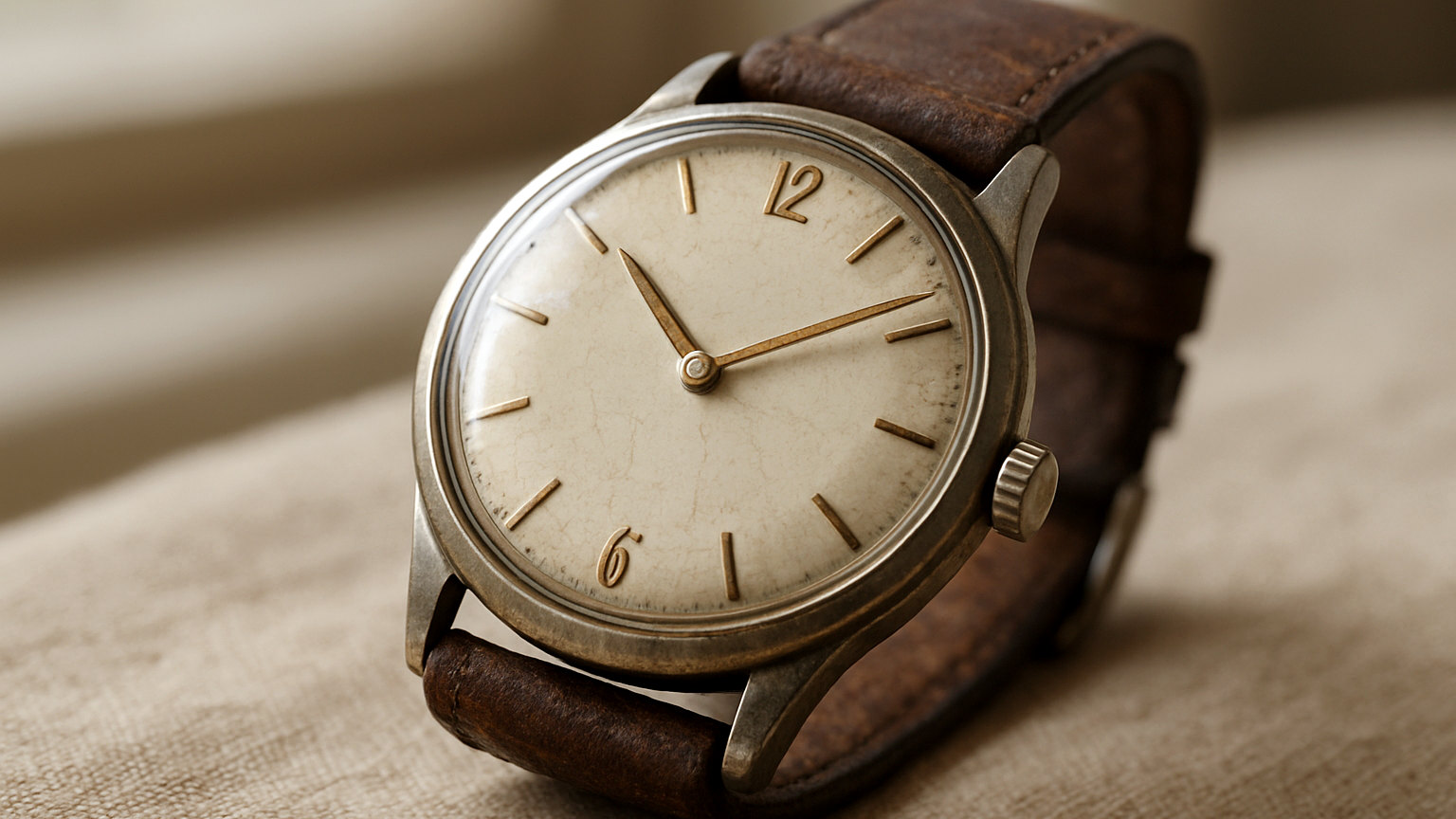
By the printing and by the wear. Original printing sits within the surface with slight softness; refinished printing is frequently too crisp, with lettering marginally the wrong shape and spacing that does not quite sit right.
Check the date and text positions against reference images of the same reference, since refinishers work from photographs and get details subtly wrong. Look for wear around the winding hole and the centre that a refinish removes. Age spotting and faint discolouration are preferred to a dial that looks new.
What about the hands and luminous material?
Check the hands match each other in style, metal and degree of ageing, and that they are correct for the reference. Mismatched hands are a cheap substitution.
Where the dial has luminous markers, the material on the hands should match them in colour and degree of ageing. Luminous compound yellows at a rate determined by its age and composition, so hands glowing a different shade from the dial almost certainly came from elsewhere.
How do you assess the case?
By shape rather than shine. Cases were made with defined edges, facets and lug profiles, and over polishing rounds them off, which is immediately obvious to anyone familiar with the model.
Compare the case profile against reference images. Check whether hallmarks, engraved case numbers and any text on the caseback are still crisp or have been polished nearly flat. A case with honest wear beats a buffed one, and a heavily polished case has lost material permanently.
What paperwork should accompany it?
The original box, warranty papers, service records and purchase receipt, described in the trade as a full set. These add substantially and are also evidence of authenticity.
Papers can be faked, so treat them as supporting evidence rather than proof. Check that any serial numbers on the papers match the watch, since mismatched papers are a warning rather than a reassurance. Service records from a recognised watchmaker are genuinely useful.
What should you do before buying?
Have the watch opened and examined by an independent watchmaker familiar with the model, and get the assessment in writing. This is the single most useful step and it is regularly skipped.
Ask the seller directly what has been replaced and get the answer in writing on the receipt. Buy from someone who will stand behind the description, and be sceptical of any vintage watch that looks entirely pristine, since original condition and perfect condition are rarely the same thing.