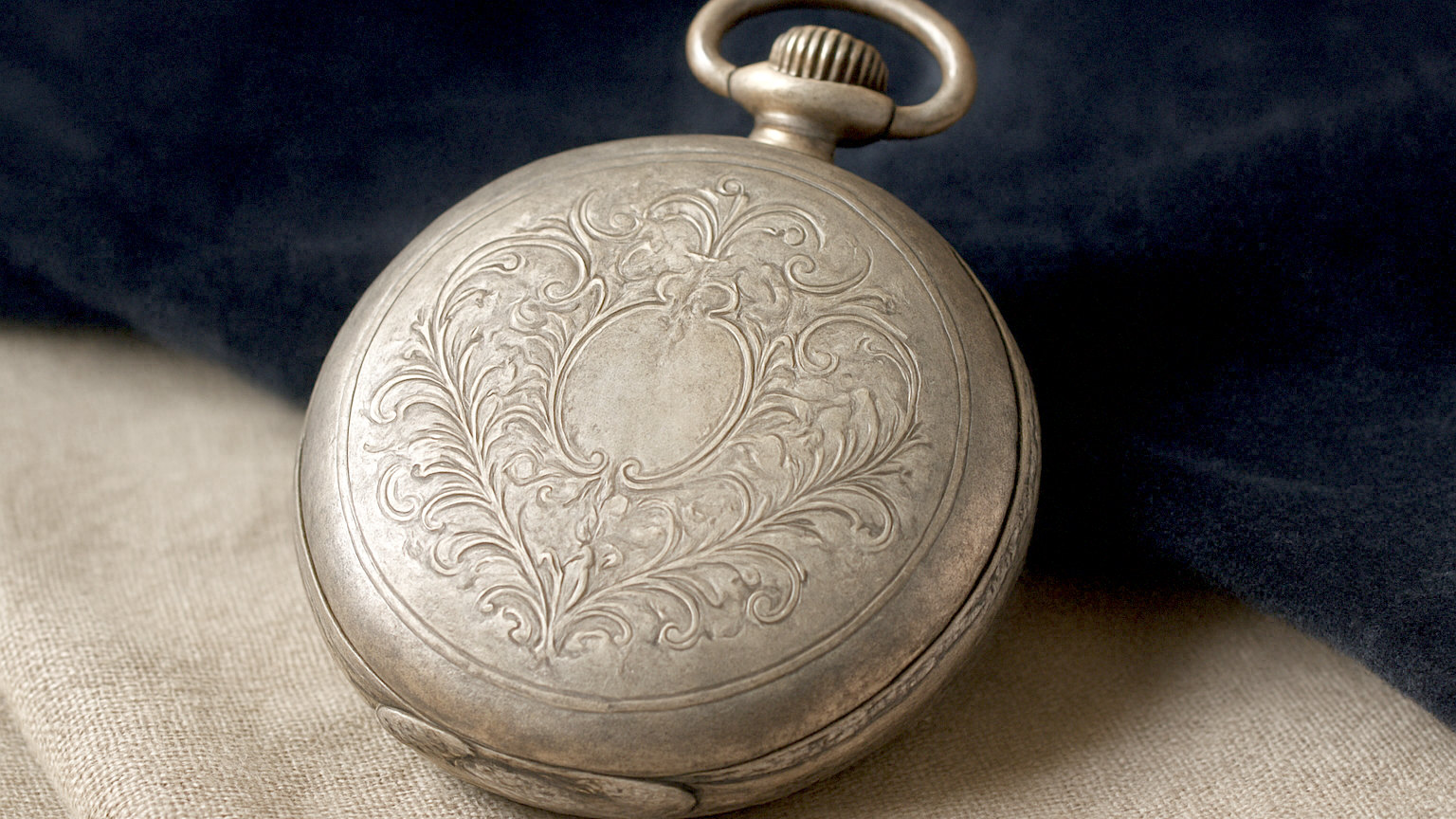
Watches are among the antiques most frequently sold badly, because the value is inside the case and a seller who has not opened it cannot describe what they have. A watch offered as a gold case with an unspecified movement is being sold as metal, which is frequently a fraction of what it is worth.
What should you establish first?
What the movement actually is. Open the case if you can do so safely, record the maker name, the calibre and the serial number, and photograph the movement clearly.
If the case will not open with a thumbnail in the lip, take it to a watchmaker rather than forcing it. That single step frequently changes the value substantially, since the movement is what a specialist buyer is assessing.
What else should you record?
The case hallmark and its date, the case reference and serial number, the escapement type, whether the dial is original, and whether the watch runs.
Note anything that appears replaced: hands, crown, crystal or bezel. Being able to answer these questions honestly makes a seller credible and makes a buyer confident, which is worth real money.
Where should a good watch be sold?
A specialist horological auction or a dealer in that type. General salerooms catalogue watches briefly and frequently sell them to the trade well below what a specialist sale achieves.
Specialist sales reach collectors who compete with each other, which is what produces strong prices. For vintage wristwatches particularly, the specialist market is international and the difference in outcome is large.
What about gold cases?
Never sell a watch by the weight of its case without establishing what the movement is. A great many good movements have been destroyed because the case was worth something obvious and the contents were not assessed.
Scrap sets a floor and nothing more. Have any gold cased watch looked at by somebody who will open it before accepting a weight based offer, since the movement may be worth a multiple of the metal.
Should you have it serviced first?
Generally not. Servicing is expensive and a buyer will frequently want it done by their own watchmaker anyway, so you rarely recover the cost.
Describe it honestly as running or not running instead. What you should not do is wind a long idle watch repeatedly to demonstrate it works, since running a dry movement causes wear and reduces what you are selling.
What should you never do before selling?
Polish the case or refinish the dial. Both look like improvements and both reduce value substantially, and neither can be undone.
Over polishing rounds the case edges and flattens hallmarks, which is immediately obvious to a specialist. A refinished dial can cost a collectable watch a large part of its worth. Present the watch exactly as it has survived.
What paperwork adds value?
The original box, warranty papers, service records and purchase receipt, described collectively as a full set. These add substantially, particularly on vintage wristwatches.
Service history matters in its own right, since it shows the movement has been maintained. Gather everything you have, keep it together, and provide it with the watch rather than discovering it afterwards.
How should you handle a private sale?
With normal precautions. Meet somewhere public in daylight, take payment that has cleared irreversibly before the watch changes hands, and provide a written receipt describing the piece.
Be cautious of buyers insisting on their own courier, and never post a valuable watch without full insured tracked carriage arranged by you. Photograph the watch and the packing at every stage.
What is a realistic expectation?
For an ordinary silver cased pocket watch, modest, since they survive in very large numbers. For a fine fusee movement, a named maker or a sought after wristwatch, considerably more.
Research completed sales for the specific calibre and reference rather than for watches generally, since the range within the category is enormous. Two or three specialist opinions cost nothing at a valuation day and will tell you which end of it you are at.