In watch collecting the dial does more to set the price than almost any other component, which surprises people who assume the movement decides everything. The movement determines quality; the dial determines whether anybody wants it. And because a tired dial can be made to look new, it is also the component where most value is quietly destroyed.
What are dials made of?
Enamel on earlier watches, which is a glassy layer fired onto a metal base, producing a hard white surface with real depth. Later dials use painted or printed metal, and later still various applied and lacquered finishes.
Enamel is durable but brittle, so it chips and cracks rather than wearing. Metal dials scratch and discolour instead. Establishing which you have determines what faults to expect and what can reasonably be repaired.
Are hairline cracks a problem?
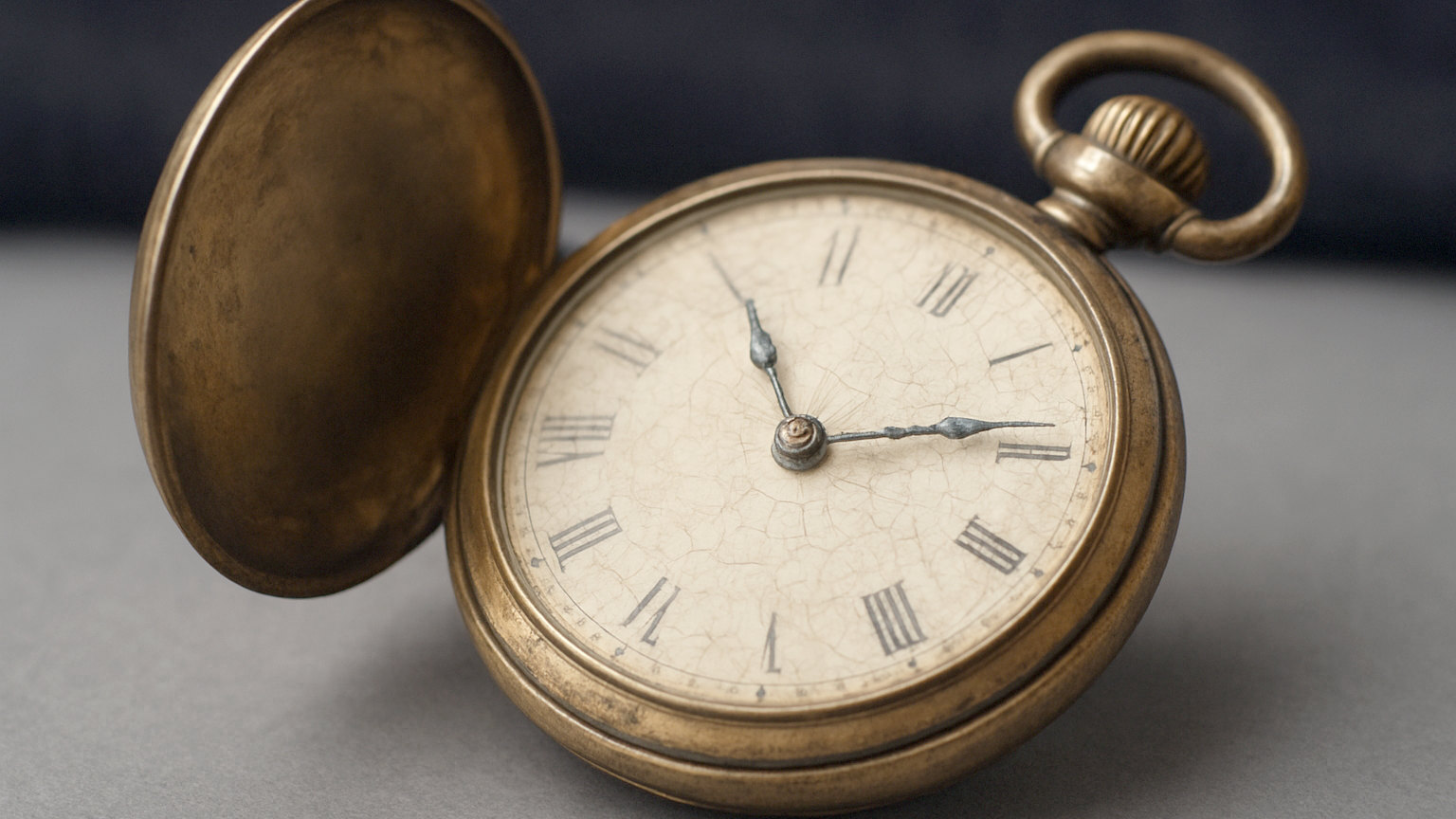
In enamel they are extremely common and largely tolerated, particularly fine lines radiating from the winding hole or the edge. Collectors accept them as part of an old enamel dial.
What matters more is whether any enamel is actually missing, since a chip leaves a visible loss that cannot be filled invisibly. Hold the dial at an angle under a light and look across the surface rather than straight at it, which reveals both cracks and any restoration.
How do you spot a refinished dial?
By the printing and the surface. Original printing has slight softness and sits within the surface; refinished printing is frequently too crisp, with lettering slightly the wrong shape and spacing that does not quite sit right.
Look at the winding hole and the centre, since original dials show wear from the key or the hands that a refinish removes. A dial that is uniformly perfect on a watch whose case shows a century of honest wear is inconsistent, and that inconsistency is the tell.
Why does refinishing reduce value so much?
Because collectors are buying originality rather than appearance, and a refinished dial removes the evidence of it. The loss can be a very large proportion of the value on a collectable watch.
This runs directly against instinct, since a refinished dial genuinely looks better. Age spotting, faint discolouration and small blemishes are strongly preferred to a surface that has been made to look new, and honest patina on a dial is an asset rather than a fault.
What should you check on the hands?
That they match each other and suit the dial. Hands were made in matching pairs, so the hour and minute hand should share a style, a metal and a similar degree of ageing.
Mismatched hands are a cheap substitution and immediately obvious to anyone familiar with the model. Check the lengths are correct, with the minute hand reaching the minute track and the hour hand reaching the numerals. Blued steel hands should show even colour rather than patchy heat marks from later treatment.
What about luminous material?
On later watches, check that the luminous compound on the hands matches that on the dial markers in colour and degree of ageing. A mismatch indicates one or the other has been replaced.
Early luminous dials may contain radium, which is genuinely radioactive. The risk in normal handling is small, but do not open such a watch unnecessarily, do not scrape or sand luminous material, and wash your hands afterwards. Have any dial restoration on such a watch done by someone equipped for it.
What should you tell a watchmaker?
Explicitly not to refinish the dial or polish the case, since a well meaning repairer will frequently do both as a courtesy. Ask for original parts to be preserved and returned.
Say the same about the hands. A watchmaker asked to make a watch look its best will produce a bright watch worth less than the tired one you handed over, and the change cannot be undone. Put the instruction in writing when the watch is left.