Vintage wristwatches have risen further than almost any other collecting category, and the market has become sophisticated enough that small differences matter enormously. What separates a valuable watch from an ordinary one is largely invisible until the back comes off, which is why sellers who have never opened a watch frequently misprice it in both directions.
What is a calibre?
The specific movement design, identified by a number usually engraved on the movement itself. A manufacturer produced many calibres over the years, and they differ substantially in quality and desirability.
Finding the calibre number is the single most useful step in identifying a watch, because it establishes what the movement actually is rather than what the dial name suggests. Reference databases list production years, specifications and known variants for most established makers.
Where do you find the numbers?
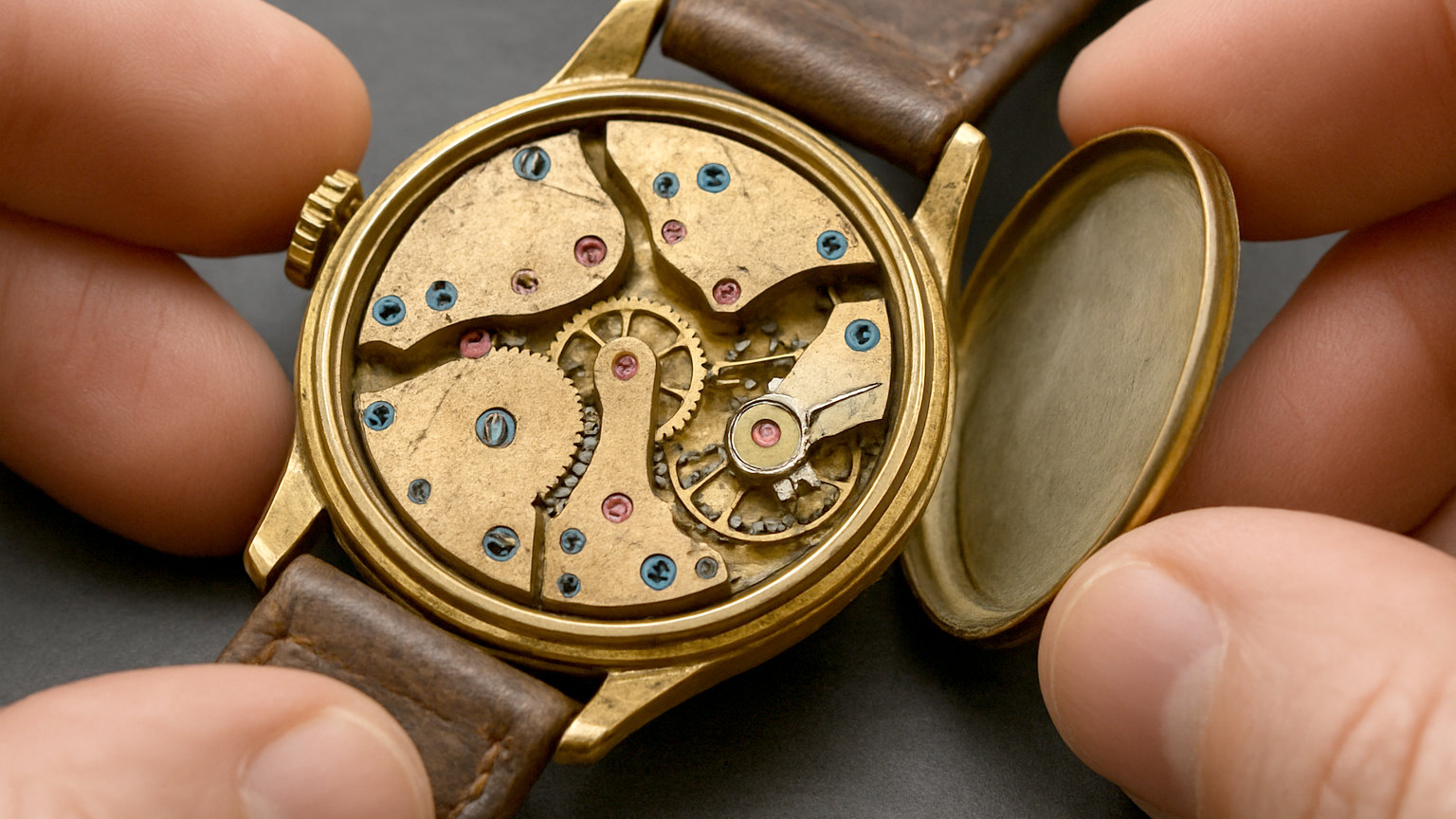
The calibre is usually engraved on the movement plate or bridge, often near the balance. A separate serial number appears on the movement as well, and case numbers are stamped inside the caseback.
Record all of them, since they serve different purposes. Serial numbers date the movement through published records. Case numbers identify the case reference, which determines the model. A movement and case whose numbers indicate very different periods suggest the watch has been recased.
What indicates a good movement?
Finishing and jewel count. Better movements show decorated bridges, polished screw heads, well cut wheels and a generally considered appearance, while cheaper ones are plain and roughly finished.
The jewel count is usually marked on the movement. Higher counts generally indicate better bearings and a more sophisticated design, though the number alone can be inflated by adding jewels that serve no function. Look at the overall quality rather than the number in isolation.
Why does the dial matter so much?
Because collectors pay heavily for originality, and the dial is the most visible original surface. A professionally refinished dial can cost a collectable watch a very large part of its value even though it looks better afterwards.
Signs of refinishing include printing that is slightly too crisp, lettering with wrong spacing, and a surface lacking the subtle depth of the original. Age spotting, faint discolouration and even small blemishes are strongly preferred to a dial that has been made to look new.
What about the case?
Original shape matters more than shine. Cases were designed with defined edges and facets, and over polishing rounds them off, which is immediately obvious to anyone familiar with the model.
Compare the case profile against reference images of the same reference. Look at whether the lugs are sharp or rounded, and whether hallmarks and engraved case numbers are still crisp or have been polished nearly flat. A case with honest wear beats one that has been buffed.
How can you tell if parts have been replaced?
By checking whether everything is correct for the reference. Hands, crown, crystal, bezel and bracelet are all frequently swapped, and each replacement reduces value.
Look at whether the hands match each other in style and patina, and whether the luminous material on the hands matches the dial markers in colour and ageing. Mismatched ageing between hands and dial is a common indicator that one or the other has been changed.
Should you have it serviced?
Before wearing regularly, yes, by someone experienced with vintage movements rather than a general repairer. Old lubricants dry and running a dry movement causes wear that is expensive to correct.
Ask specifically that original parts be preserved and returned rather than replaced with modern equivalents, since originality affects value. Ask them not to polish the case or refinish the dial. A good watchmaker will do exactly this if asked, and will do the opposite if not.
What paperwork adds value?
The original box, warranty papers, service records and the purchase receipt, collectively described in the trade as full set. Complete examples command a substantial premium over the watch alone.
Service history matters in its own right, since it demonstrates the movement has been maintained rather than run into the ground. Keep every invoice from any work carried out, and pass the whole file on with the watch when it is sold.