A toy collection accumulates damage quietly. Light fades printed surfaces, damp rusts tinplate, unsuitable storage materials trigger corrosion in lead alloys, and card boxes crush under their own stacking. None of it is dramatic and all of it is cumulative, which is why it goes unnoticed until it is done.
What does light do?
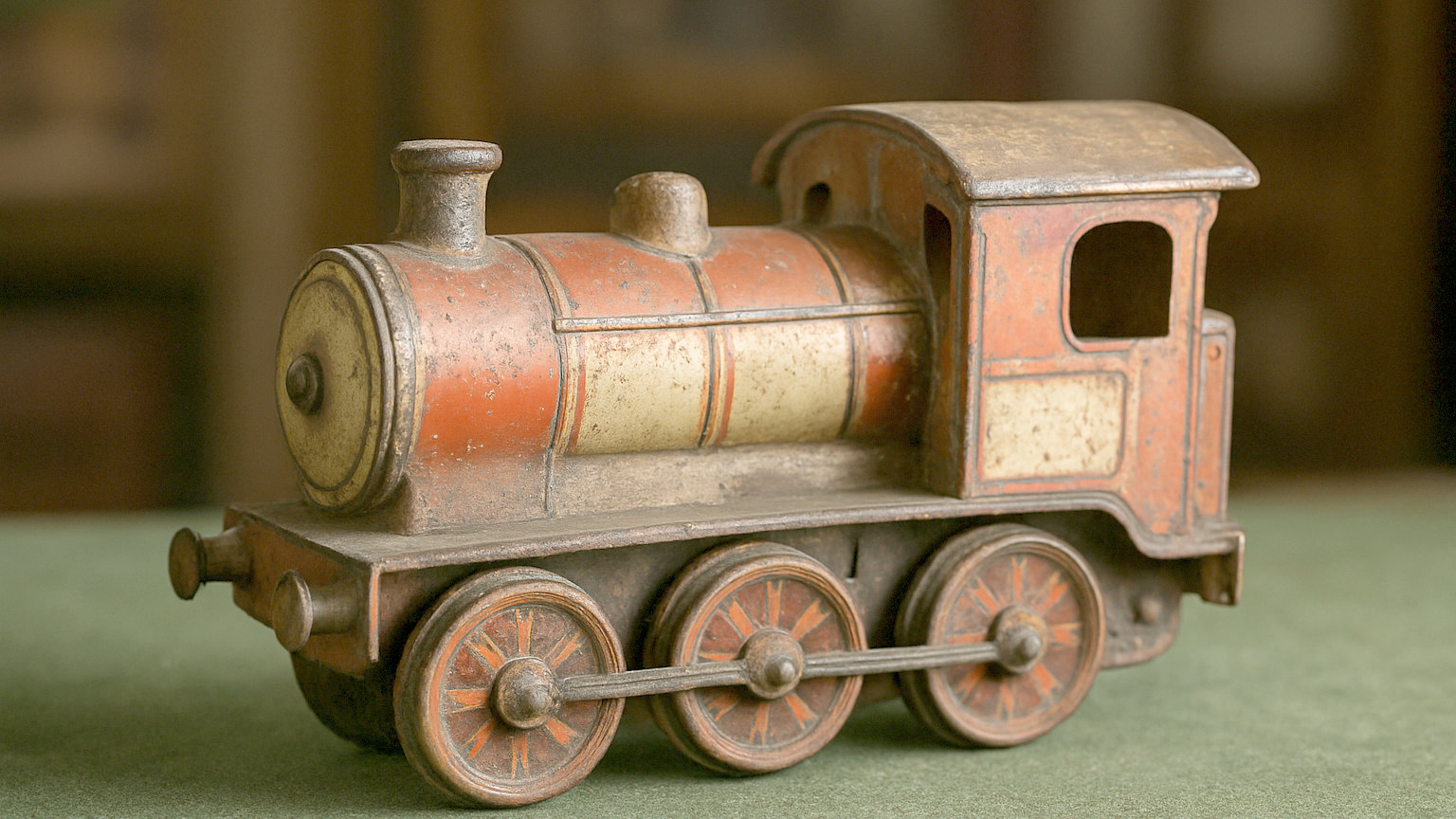
Fades printed and painted surfaces permanently, and it is the commonest damage on displayed collections. Lithographed tinplate, printed boxes and painted die cast all lose colour under exposure.
The damage is uneven, so a toy displayed facing a window fades on one side while the other stays bright. Keep collections out of direct sunlight, use ultraviolet filtering film on windows where necessary, and rotate displayed items periodically.
Why does damp matter so much?
Because tinplate is thin steel with a protective coating, and once that coating is breached the metal rusts progressively. Rust does not stop on its own.
Damp also softens and stains card boxes, warps wooden toys, and rots textile elements on soft toys. Avoid lofts, garages, basements and any room prone to condensation, and aim for stable moderate humidity rather than any particular level.
What is lead rot?
Progressive corrosion of lead alloy figures, appearing as a white powdery deposit and eventually crumbling the metal entirely. It is triggered by organic acids in the surrounding air.
Oak cabinets, some cardboard, certain adhesives and some paints all release vapours that cause it. Store lead figures in inert materials, keep them away from unsealed timber, and isolate any affected piece immediately since it can spread to others nearby.
How should boxes be stored?
Flat, supported, and never under weight. Card is more vulnerable than almost anything it contains, and a box crushed in storage cannot be restored.
Support the sides so they cannot collapse, avoid stacking anything heavy on top, and never use adhesive tape, since the residue damages printed surfaces permanently. Keep the contents inside the box where possible, packed so nothing shifts.
What materials are safe?
Acid free tissue, inert plastic trays and sealed shelving. Avoid soft flexible plastics containing plasticisers, ordinary cardboard, newspaper, wool and unsealed oak.
Anything that smells strongly is releasing something, which is a reasonable rough test. Museum suppliers sell archival materials at modest cost, and for a collection of any value they are worth the difference over general storage boxes.
How should a collection be displayed?
In a closed case rather than open shelving, which halves the dusting and slows air exchange. Line it with inert material rather than felt or baize of unknown composition.
Support anything top heavy so it cannot topple, keep items far enough apart that they do not touch, and secure the case if children or animals have access. A shelf collapse destroys more collections than any other single accident.
How should toys be cleaned?
With a soft dry brush and nothing else, on almost everything. Never wash lithographed tin, never polish painted surfaces, and never use solvents.
Soft toys should be brushed gently rather than washed, since washing mats mohair permanently. Dolls should never be immersed. Dust is the only thing safe to remove, and even that should be done gently rather than vigorously.
What about clockwork mechanisms?
Store them unwound, since a mainspring left under tension for decades takes a permanent set and loses power. Wind gently when demonstrating and stop at any resistance.
Do not oil a mechanism yourself, and do not run a stiff motor repeatedly hoping it frees. Both cause wear. If a mechanism needs attention, a specialist repairer of mechanical toys is the right answer.
What records should you keep?
A catalogue with photographs, descriptions, what you paid and where each item came from. That serves for insurance, identifies pieces if stolen, and saves your executors an enormous amount of work.
Keep it somewhere other than with the collection and back it up. Tell somebody it exists, since toy collections are frequently sold for a fraction of their worth by families who had no idea what they were looking at.