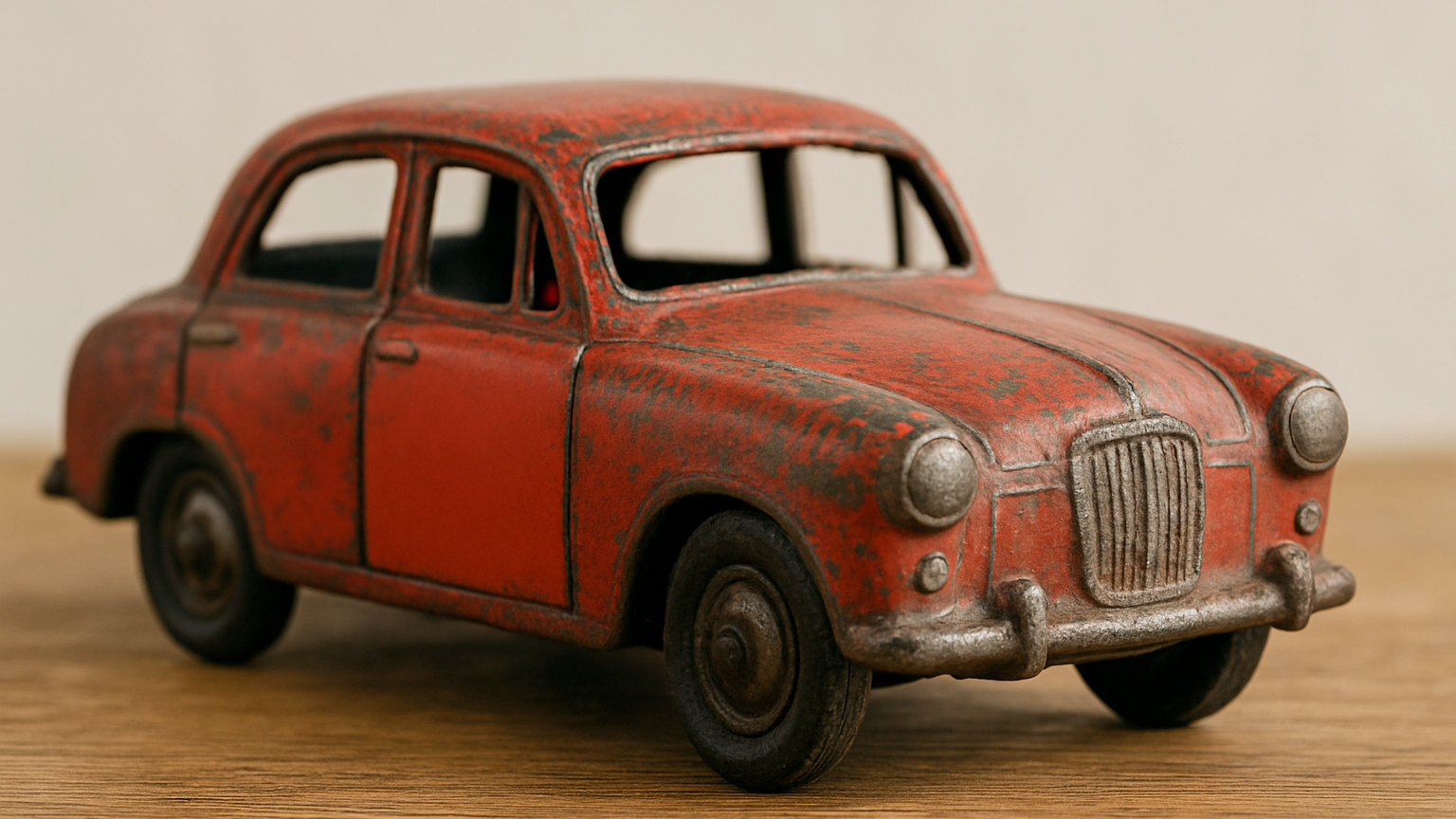
In die cast collecting, original paint is the whole proposition. A model with genuine play wear and honest chips is worth substantially more than the same model repainted to look new, which strikes people as backwards until they understand that collectors are buying evidence of originality rather than appearance.
Why does repainting destroy value?
Because it removes the only proof that a model is what it claims to be. Factory paint has a specific colour, thickness and finish that identify a production run, and colour variations are frequently what separate a common model from a rare one.
Once repainted, that evidence is gone and the model becomes indistinguishable from a common version dressed up as a scarce one. Collectors therefore discount repaints heavily, and a repainted rare colour is worth roughly what the common version is worth.
What does paint thickness reveal?
A great deal. Factory paint was applied thinly and evenly by machine, so fine cast detail such as panel lines, grilles, badges and door shut lines stays crisp beneath it.
Repaints are almost always thicker, because the restorer is covering existing damage. That extra thickness softens and fills detail, so grilles look mushy, panel lines become shallow and small raised features lose definition. Compare a suspect model against a known original of the same casting and the difference is obvious.
Where does overspray give it away?
In the places a factory would never have painted. Look inside the body shell, under the wheel arches, around the base plate join, and at the edges of any window glazing.
Factory assembly painted the body before the model was put together, so interiors and undersides are typically bare metal or a different colour. A repaint applied to an assembled model leaves traces of body colour on the baseplate, on the tyres, on the glazing edges or on the interior. Any colour where colour does not belong is a strong indicator.
How do you check the shade?
Against a reference rather than from memory. Collector guides and club archives document the exact shades used for each production run, and restorers rarely match them precisely because the original pigments are no longer available.
Look at the model in daylight rather than under artificial light, which shifts colours. A shade that is close but slightly too bright, too dull or fractionally the wrong tone is a common sign. Metallic finishes are particularly hard to match, since the flake size in modern paint differs from the original.
What do the rivets and baseplate tell you?
Whether the model has been apart. Die cast models were assembled with rivets peened over on the underside, and separating a body from its base requires drilling or grinding those rivets.
Look closely at each rivet. A flattened, drilled or replaced rivet, or one that has been reground and reshaped, means the model has been dismantled, which almost always accompanies a repaint or a parts swap. Screws where rivets should be are conclusive.
Are replacement parts a problem?
They must be disclosed, and they reduce value in proportion to how much of the model they represent. Reproduction wheels, tyres, windows and figures are widely available for popular models.
Reproduction tyres are usually slightly too black and too soft compared with originals, which harden and grey with age. Replacement windows often sit less precisely than factory glazing. A model described as having original paint but reproduction tyres is honestly described; one silent on the point is worth asking about.
What should you do with a chipped original?
Leave it. Chips, play wear and even a missing wheel are all preferable to restoration, and a model in original condition with faults will always find a buyer at a fair price.
Clean only with a soft dry brush to remove dust. Do not wash, do not polish, and do not touch in chips with paint, since a touched up model is treated as restored. If a model genuinely warrants restoration, keep it separate from your original condition pieces and describe it accurately if you ever sell it.