Tinplate toys are the aristocracy of the toy market, with the best early examples reaching remarkable prices. They are also widely reproduced. What separates genuine early production from later copies is how the tin was decorated and how the pieces were joined, and both are visible without dismantling anything.
What is tinplate?
Thin steel sheet coated with tin to prevent rust, pressed into shape and assembled. It was cheap, light and could be printed on, which made it ideal for mass produced toys.
Because it is thin steel, it dents rather than breaks and it rusts wherever the coating is damaged. That behaviour is diagnostic, since a toy claimed to be tinplate that shows no dents and no rust anywhere deserves a second look.
How were they decorated?
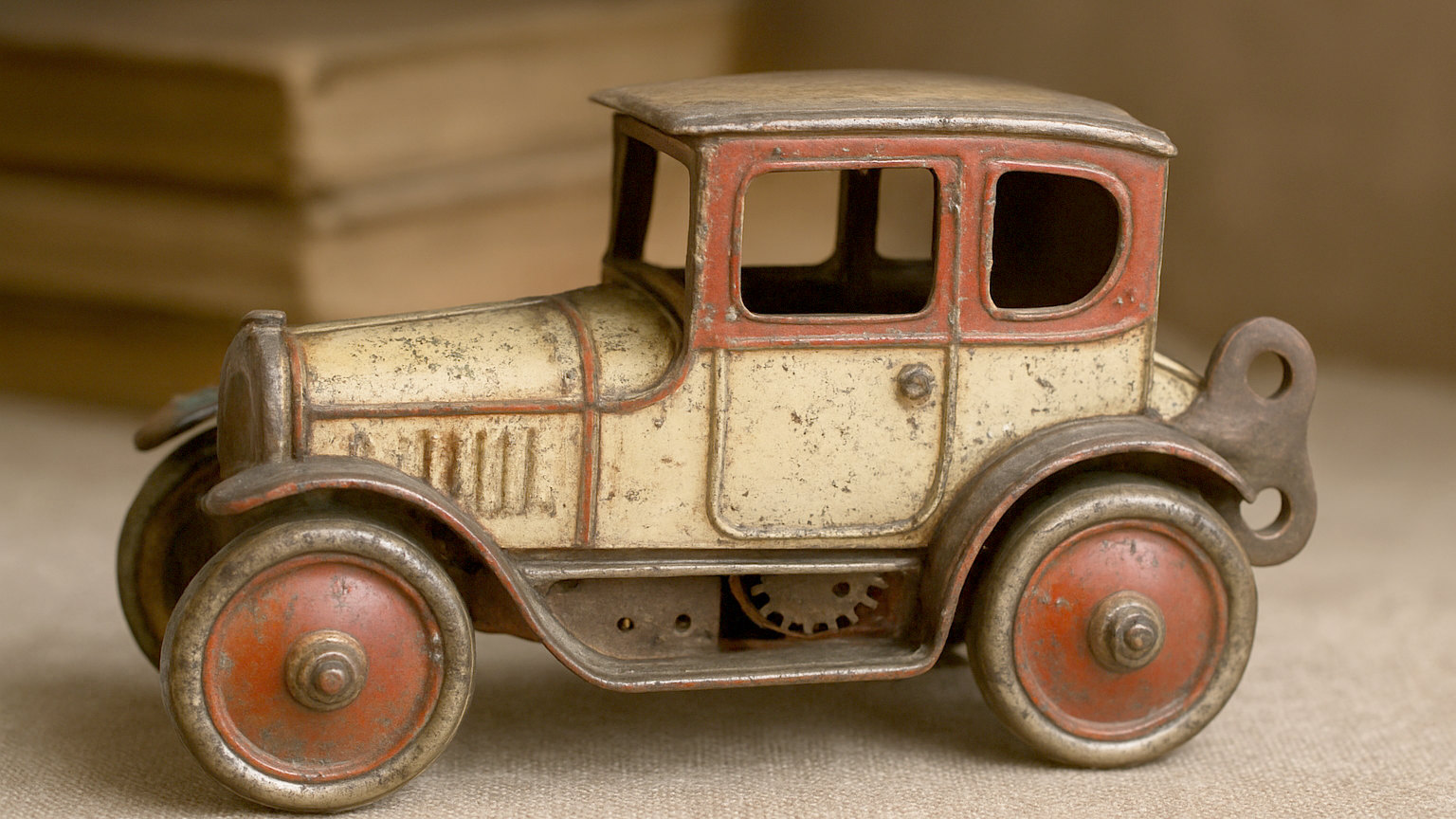
Earlier toys were hand painted, and later ones lithographed, meaning the design was printed onto the flat sheet before it was pressed and assembled. The distinction is the single most useful dating feature.
Hand painting shows brush strokes, slight variation between examples, and paint sitting on the surface with visible thickness. Lithography is perfectly flat, precisely registered, and identical on every example. Look under magnification at a detailed area: printed dot structure or perfectly even colour indicates lithography.
How were the pieces joined?
By tabs and slots, mostly. Small projecting tabs were pushed through slots and bent over on the inside, which required no solder and no fixings.
Look inside through any opening for those bent tabs, which should show genuine age and slight irregularity. Some early work is soldered, which indicates more careful construction. Modern reproductions frequently use spot welding or screws, both of which are immediately wrong for the period.
What should you check on the clockwork?
That it is present, complete and original. Wind it gently and stop at any resistance, since mainsprings in toy motors break easily and replacements are awkward.
Look at the key, which should suit the winding square, and check whether it is the original or a substitute. Examine the motor through any opening for missing gears and for crude repairs. A toy that does not run is worth considerably less, though a complete motor needing cleaning is a far better prospect than one missing parts.
How do you spot a reproduction?
By weight, by finish and by the wrong kind of wear. Reproductions are frequently lighter, with thinner tin, softer pressing detail and printing that is too crisp and too bright.
Genuine old lithography fades and scratches through to bare metal at handled points, and rust appears at edges and folds where the coating failed. Artificial ageing tends to be evenly distributed and often includes rust in places water would never have sat. Check the base and the inside, which reproductions finish too neatly.
Where are the maker marks?
Printed as part of the lithography, usually small and on the base or an inconspicuous panel, or stamped into the tin. Many early makers used a trademark device rather than a name.
Check the base thoroughly, including under any axle or motor housing. Country of origin wording is useful, since import rules required it from a known point and its presence indicates later production. Absence of any mark is common and does not indicate a problem.
How should tinplate be stored?
Dry above everything, because rust is the enemy and it is progressive. Avoid lofts, garages and outside walls where condensation forms.
Do not clean beyond removing loose dust with a soft brush, and never use water, polish or rust remover, all of which strip lithography instantly. Do not repaint under any circumstances, since original printed surface with honest wear is worth far more than any restoration. Store with the motor unwound to avoid stressing the spring.
Does the original box matter?
Enormously, as it does throughout toy collecting. A boxed tinplate toy can be worth several times the same toy loose, and the box also confirms exactly which variant you have.