A great deal of antique jewellery is not gold, and a surprising amount of it was never pretending to be. Several alloys and treatments were developed as legitimate materials with their own reputation, sold openly and worn proudly. Recognising them prevents both disappointment and the opposite mistake of discarding something collectable.
What is pinchbeck?
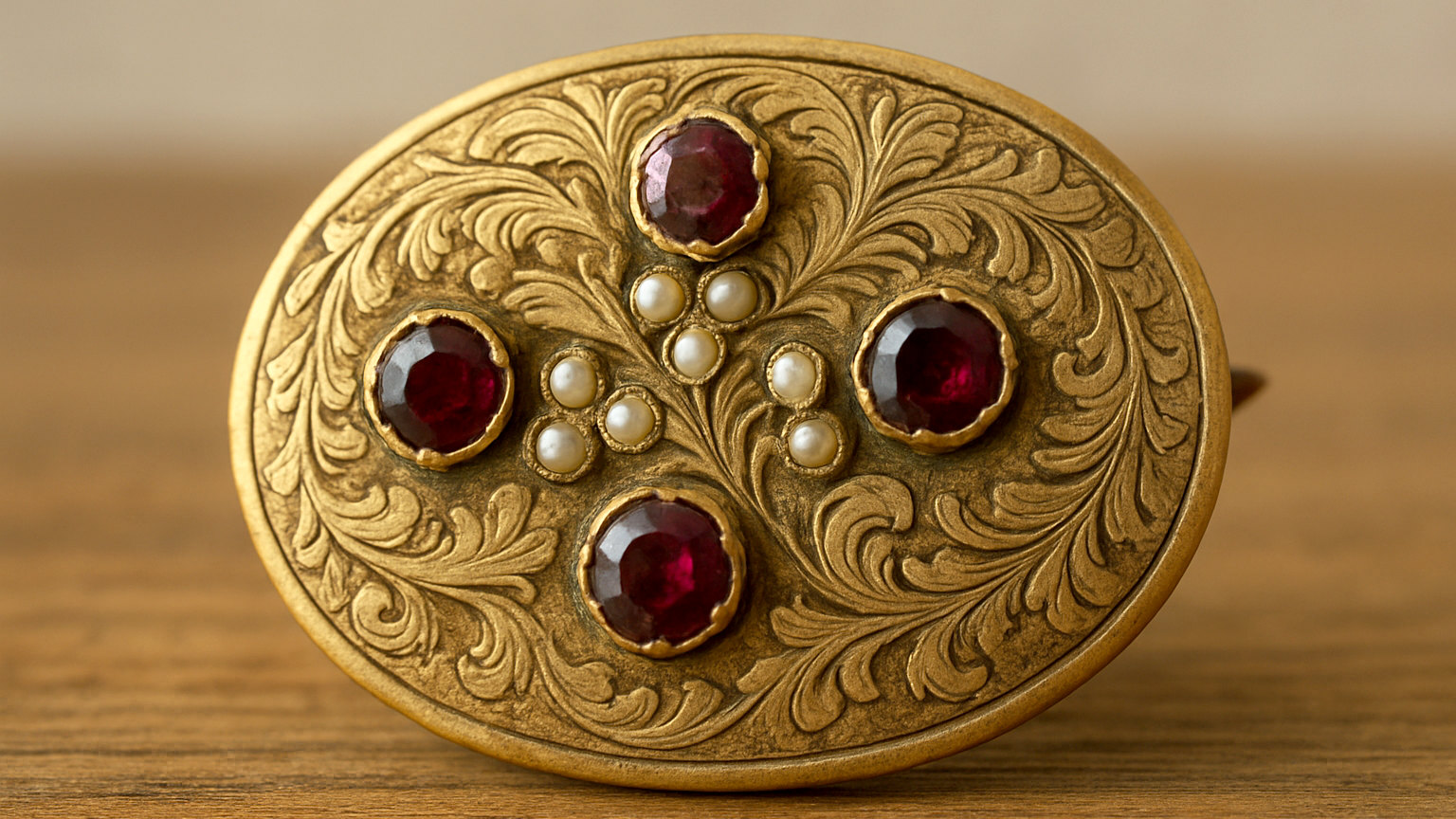
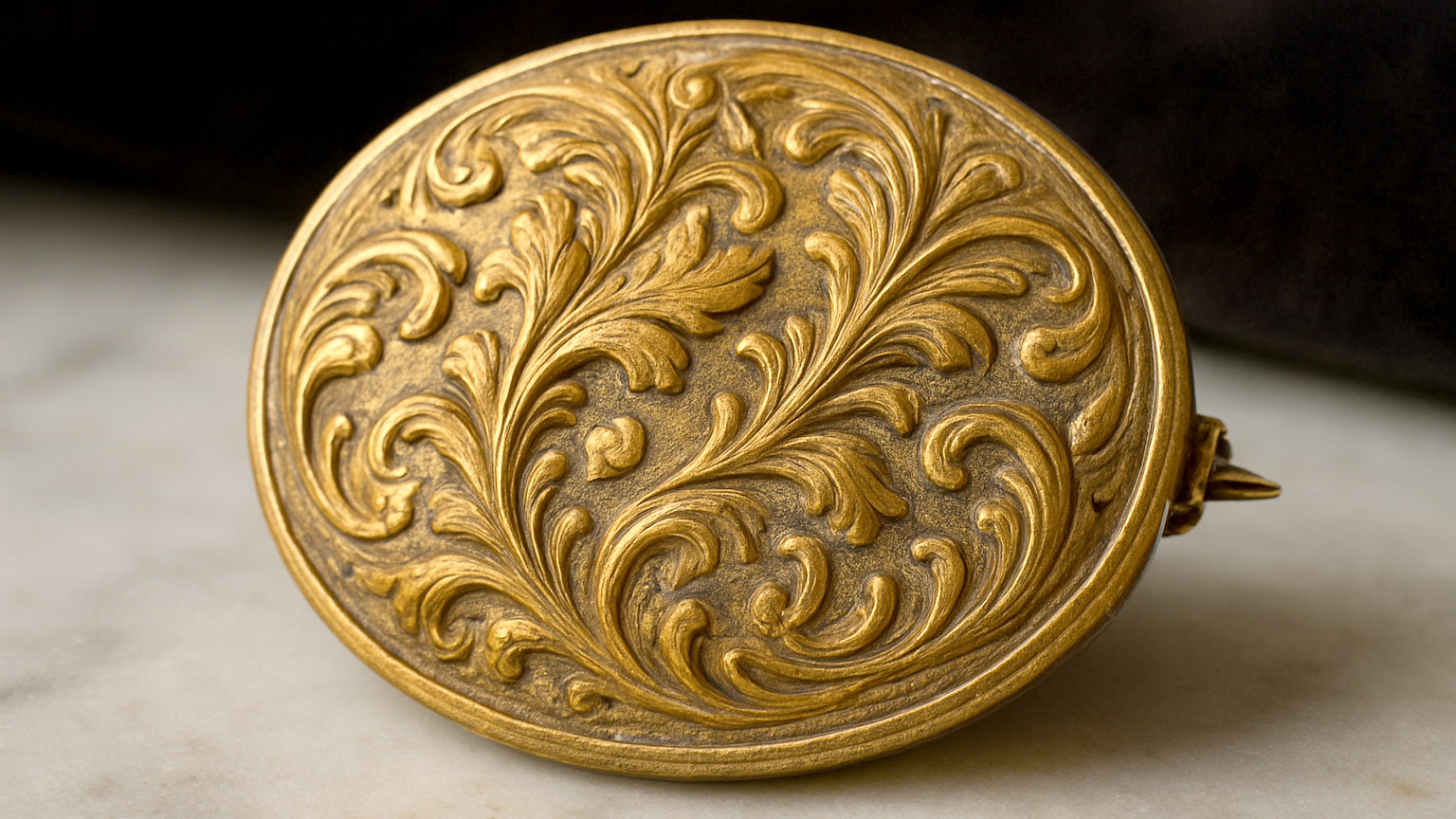
An alloy of copper and zinc, developed to resemble gold closely enough to be worn as jewellery without the cost. It takes a warm yellow colour that ages to a slightly deeper tone, and good examples are remarkably convincing.
It was made as a respectable material rather than a counterfeit, and it was sold as what it was. Period pinchbeck jewellery is collected in its own right today, and a fine example can be worth considerably more than a poor piece of low carat gold.
How do you recognise it?
By colour, weight and wear. Pinchbeck has a warmer, slightly more coppery tone than gold and lacks the particular density gold has in the hand, so a substantial looking brooch feels lighter than expected.
Where it has worn on high points, it does not reveal a different metal underneath, because it is the same alloy throughout. That distinguishes it from plated and rolled gold items, which show a base metal breaking through at edges and raised areas.
What is rolled gold?
A thin sheet of real gold bonded to a base metal core and then worked as one material, in much the same way that fused plate combines silver and copper. It carries a genuine and reasonably substantial layer of gold.
Rolled gold wears well and can survive a century of use, but eventually the gold thins at the highest points and the base metal shows through as a duller, greyer or pinker patch with a fairly defined edge. Marks indicating rolled gold or gold filled sometimes appear, usually with a fraction indicating the proportion of gold.
How does gilt metal differ?
Gilding deposits a very thin layer of gold onto a finished base metal object, so there is far less gold present than in rolled gold and it wears through much faster.
Early fire gilding produced a rich finish with a slightly uneven surface, while later electro gilding is thinner and more uniform. On a gilt piece the gold typically survives in recesses and protected areas while wearing away entirely on exposed surfaces, producing a two tone effect that is quite characteristic.
How can you test without causing damage?
Look for a hallmark first, since gold marked with a recognised standard settles the question immediately. Small and delicate items were often exempt from marking, so an absent mark proves nothing.
Try a magnet, since gold is not magnetic. This rules things out rather than confirming them, because many base alloys are not magnetic either. For a definite answer, a jeweller can test electronically without marking the piece. Avoid acid testing kits on anything you may keep, since they damage the surface permanently.
Are these pieces worth anything?
Frequently yes, and the value has nothing to do with metal content. It rests on design, workmanship, condition and period appeal, which is exactly how costume and decorative jewellery has always been valued.
Well made period brooches, chains and lockets in these materials sell steadily, and unusual designs from collected periods can do very well. What they will not do is fetch a price based on weight, so never sell one to a buyer offering by the gram.
How should they be cared for?
More carefully than solid gold, because the surface is finite. Never polish gilt or rolled gold with abrasive polish or a chemical dip, since either will remove the remaining gold layer and expose base metal permanently.
Wipe gently with a soft dry cloth. Keep pieces dry, since base metals beneath a worn surface will corrode, and store them separately so harder items do not scratch the finish. A piece with even honest wear is worth more than one polished back to bare metal.