Mourning jewellery was produced in enormous quantities during periods when formal mourning was a social expectation, and rings were the commonest form. They are unusual among antiques because a great many of them carry an inscription giving a name and a date, which means the object dates itself precisely rather than approximately.
What were they for?
To commemorate a death and to be distributed to mourners. It was common for a will to leave money specifically for rings to be made and given to named friends and relatives, so a single death might produce a dozen or more.
That practice explains why so many survive and why several rings sometimes turn up commemorating the same person. They were made to be worn and kept rather than displayed, and were often worn for years afterwards.
What does the inscription say?
Typically the name of the deceased, the date of death and their age, engraved inside the band or on the reverse of a bezel. Some add a phrase of remembrance.
Read it carefully under magnification and good light, since engraving inside a band wears with use. Record it exactly, including abbreviations and spellings, because that inscription is the single most valuable feature of the ring for research and for value alike.
What materials were used?
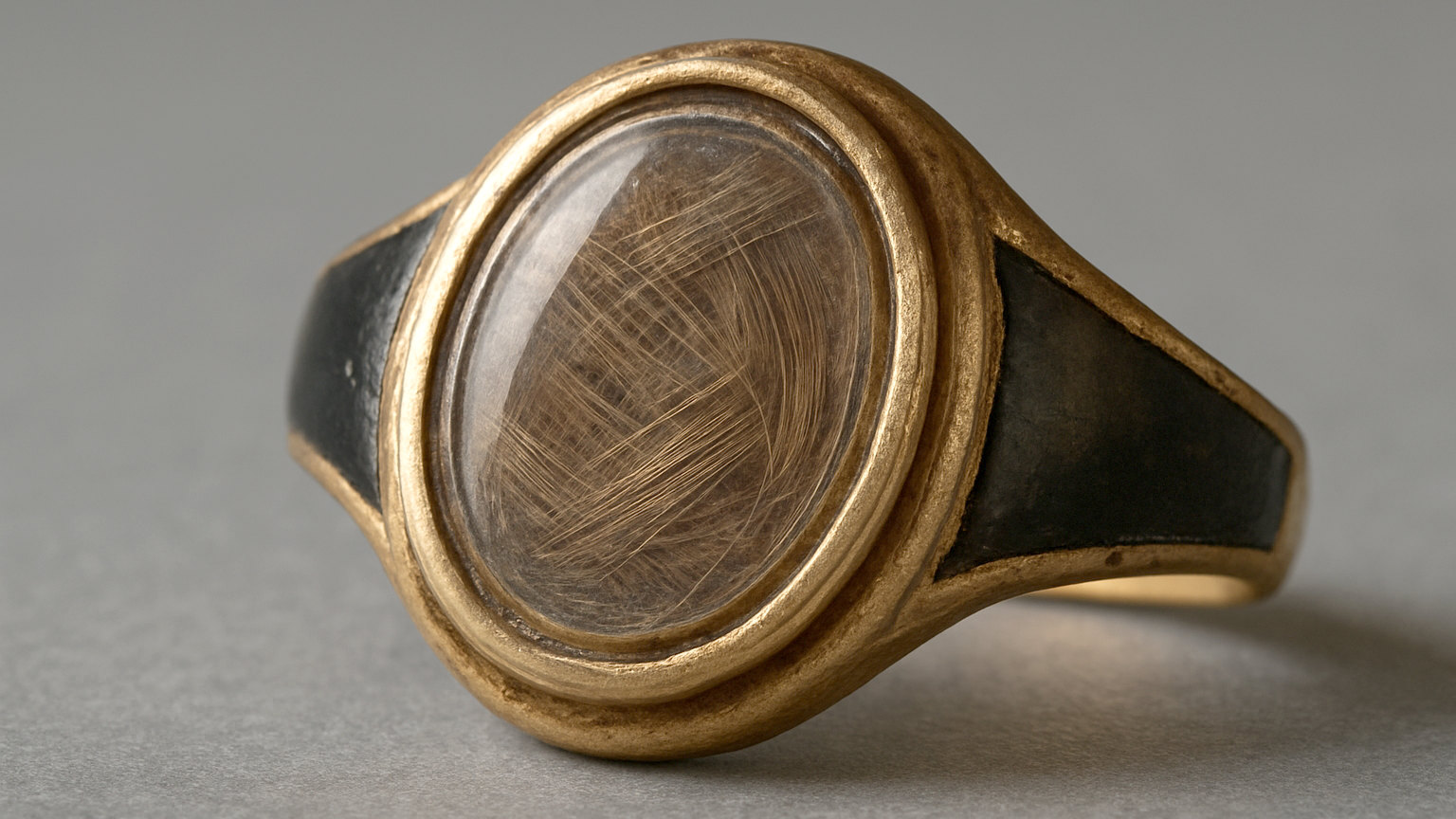
Gold with black enamel is the classic combination, with the enamel usually applied to the band or the bezel surround. White enamel was used for someone who died unmarried, which is a useful convention to know.
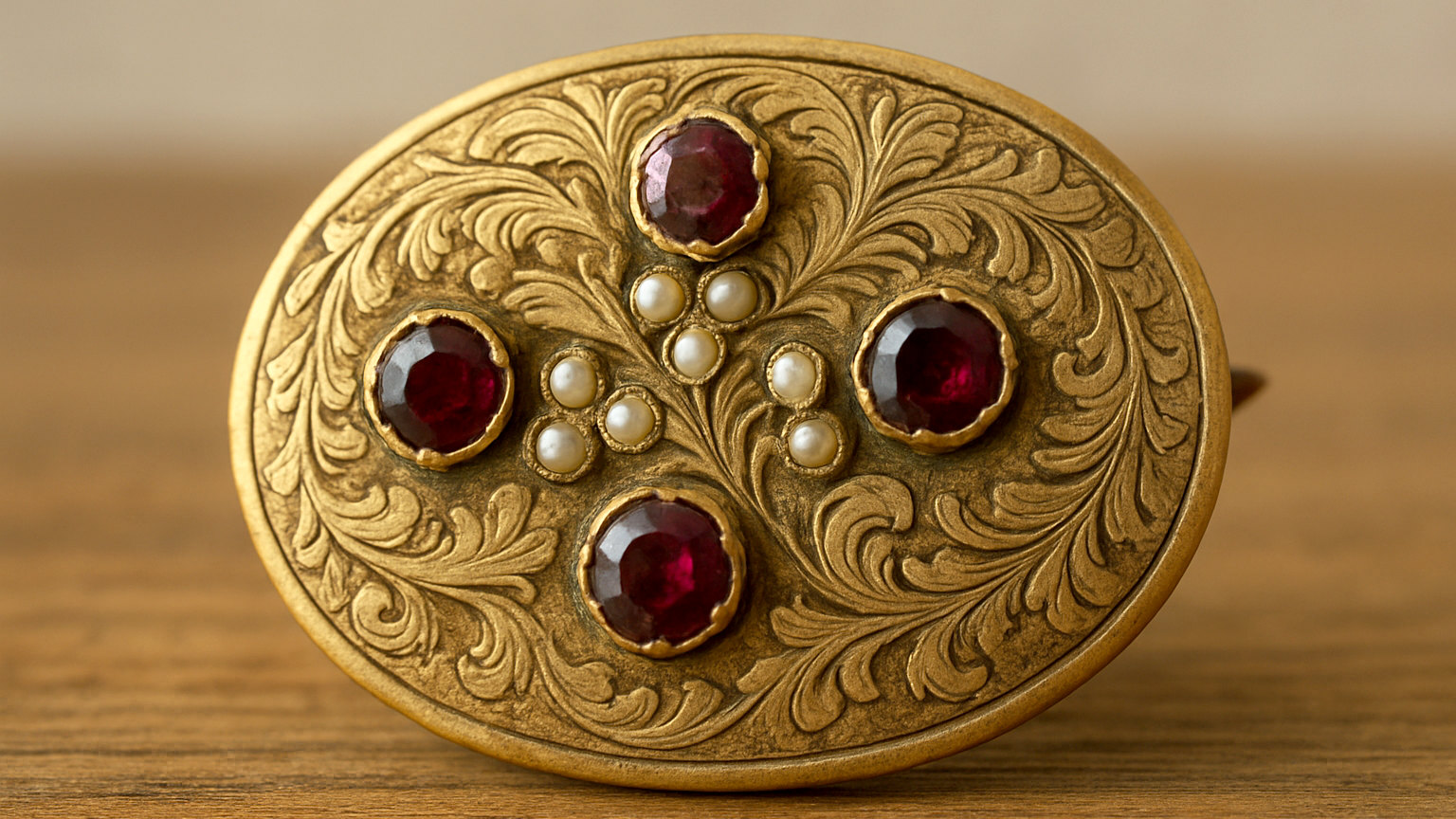
Jet, black glass and vulcanite appear in cheaper pieces. Many rings incorporate hair from the deceased, either plaited flat under a crystal or worked into a design. Pearls, representing tears, appear frequently around a bezel and are worth checking for losses.
How do you date one without an inscription?
By the same evidence used on any period jewellery. Look at the shank profile, the bezel form, the way stones are set, and the cuts used on any gemstones present.
Closed back settings with foil beneath the stones indicate earlier work. Rose and old mine cuts likewise. Check for a hallmark inside the band, though many rings were exempt from marking because of their weight, so an absent mark means nothing. Enamel style and the form of any decoration will narrow the period further.
Why does hair work need care?
Because it is organic and fragile, and because moisture will destroy it. Hair sits under a crystal or glass cover, and if that cover has cracked or the seal has failed, damp reaches the hair and it deteriorates.
Never immerse a ring containing hair, and never clean one ultrasonically. Check whether the crystal is intact and whether the compartment is sealed. Hair work that has come loose behind the glass can sometimes be reset by a specialist, but water damage cannot be undone.
How do you research the person named?
Start with parish burial records and probate records for the date given, then move to newspapers, which frequently carried death notices. The name plus an exact date is a strong search key.
Wills are particularly useful here, since a will that provides money for mourning rings will often name the recipients as well, which occasionally lets you establish who wore the ring you are holding. That kind of documented history adds real value.
What are they worth?
More than people expect, and considerably more intact than as scrap gold. Value rests on the quality of the goldwork and enamel, the elaborateness of any hair work, condition of the enamel, and whether the inscription is complete and legible.
Rings commemorating a person of historical interest attract a substantial premium. Never sell one to a buyer offering a price by weight, since the inscription and the workmanship are the whole point of the object and a weight based offer ignores both of them entirely. A great deal of irreplaceable memorial jewellery has been melted for exactly this reason.