Stones fall out of old jewellery, and they get replaced. That is entirely normal after a century or more of wear, and a sympathetic replacement is not a scandal. It does affect value substantially, though, so knowing how to tell an original stone from a later one is worth the few minutes it takes.
Why does a replaced stone matter?
Because collectors are buying a complete period object, and a modern stone breaks that completeness. It also raises a question about what else has been changed, since a jeweller who replaced a stone may have reshaped claws or rebuilt part of the setting.
The reduction is greatest where the stone is the focus of the piece, such as a solitaire ring, and least where one small stone among many has been replaced in a cluster. In either case the change should be disclosed and reflected in the price.
What does the cut tell you?
Most of the answer. Older stones were cut by hand to conserve weight from the rough crystal, so they have distinctive proportions that modern machine cutting does not reproduce.
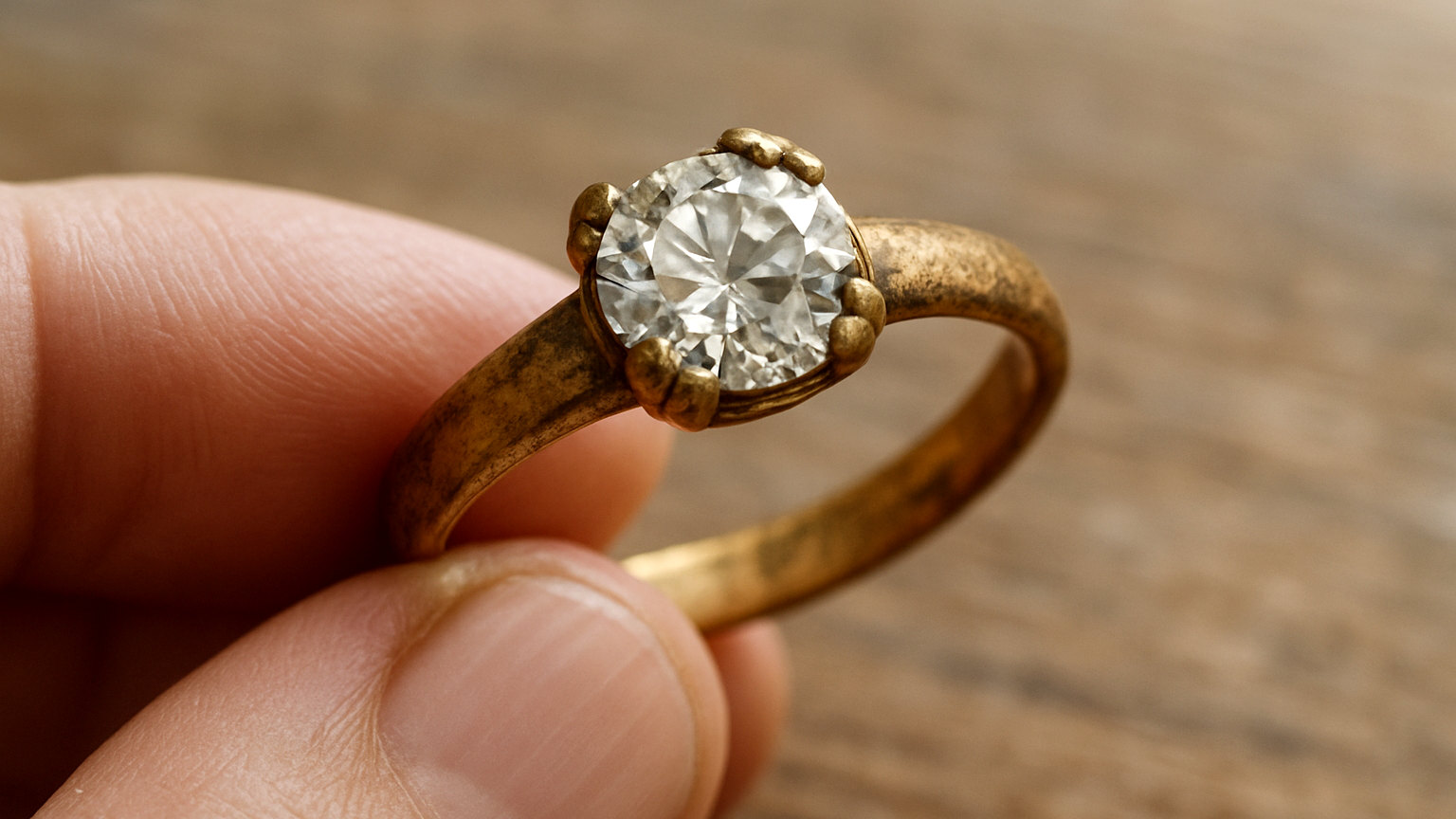
Look straight down through the stone. An old cut usually shows a small flat top facet, a high crown, a deep body and a noticeable flat facet at the very bottom, which appears as an open circle or window when viewed from above. A modern brilliant has a much larger top facet, a shallower crown and a tiny point at the base. A modern stone in an obviously early setting is the clearest possible signal.
How do you check the fit?
Look at how the stone sits in its seat. An original stone was set into a mount made for it, so it fills the setting neatly with the claws sitting evenly around the girdle.
A replacement is rarely exactly the same size. Look for claws that have been bent inward to grip a smaller stone, gaps between the stone and the collet, packing beneath the stone to raise it, or a stone that sits noticeably high or low compared with others in the same piece. Uneven claw lengths are a strong indicator of later work.
What does wear reveal?
Consistency, or the lack of it. In a piece worn for a century, everything ages together: the metal softens at the edges, claws wear thin at the tips, and the stone itself acquires small abrasions on its girdle and facet edges.
A stone with perfectly crisp facet junctions in a mount whose claws are worn to threads has not been there long. Conversely, freshly filed bright metal on claws surrounded by an otherwise mellow patina indicates recent work at that spot.
What about mismatched stones in a cluster?
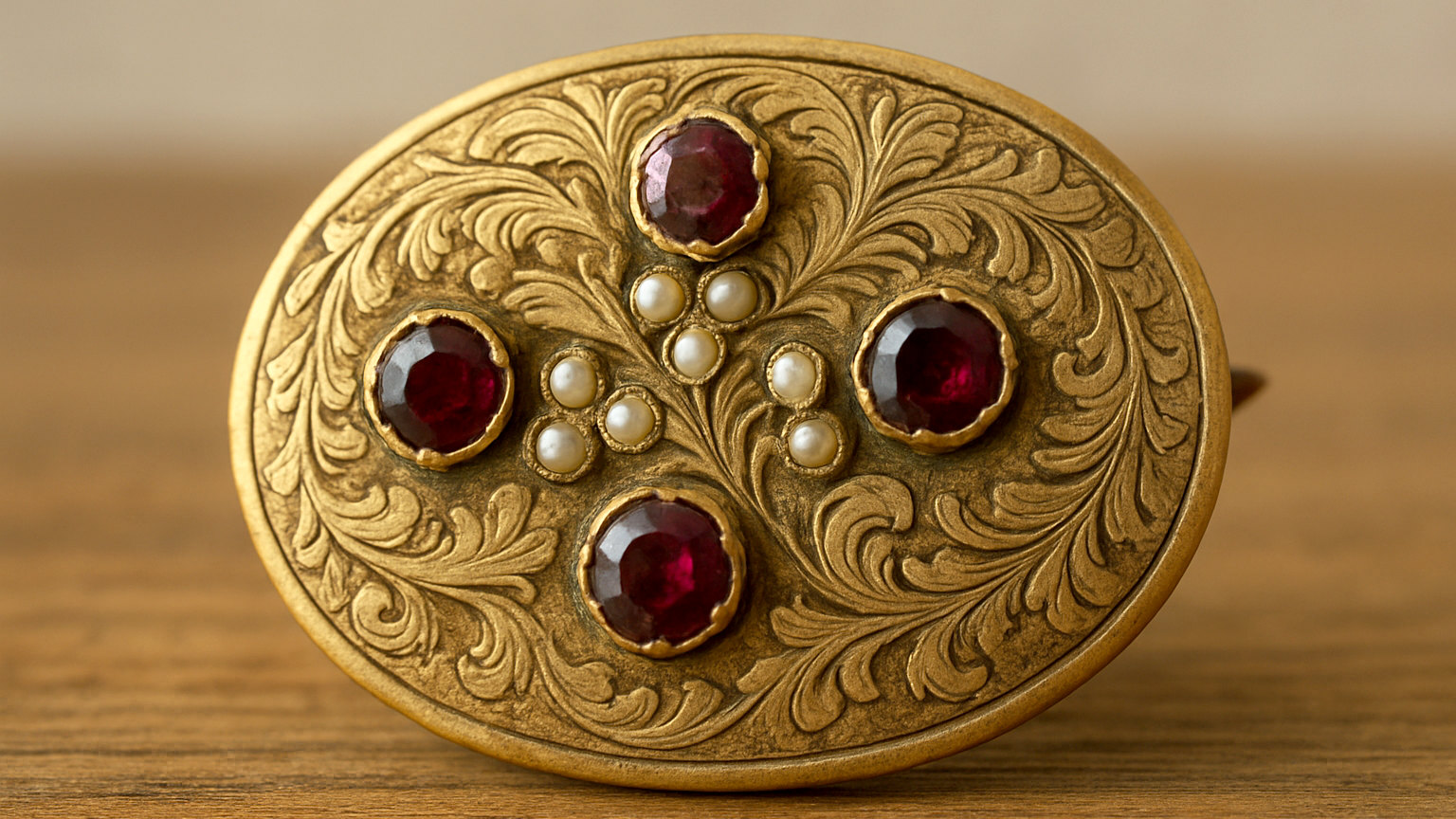
Compare them against each other rather than against an ideal. In an original cluster the stones were selected together, so they should match reasonably in colour, cut style and proportion, with the small natural variation of hand cutting.
One stone that is noticeably whiter, brighter or differently cut from its neighbours has usually been replaced. Look at them under a single light source rather than mixed lighting, and view from directly above so the comparison is fair.
Are replacement stones always a problem?
No. A sympathetic replacement using a period appropriate cut, correctly sized and well set, keeps a wearable piece in use and is far better than an empty setting or a piece broken up for parts.
What matters is honesty about it. A well matched old cut replacement affects value far less than a modern brilliant dropped into an early mount, because it preserves the character of the piece. Ask what was done and when, and expect a specialist dealer to know.
What should you do before buying?
Examine the piece under magnification with a loupe, look at it from the side as well as from above, and ask directly whether any stones have been replaced or any repairs carried out.
For anything of significance, have a jeweller or valuer look before you commit rather than after. Check the claws while you are there, since worn claws are how stones get lost in the first place, and a piece that needs work should be priced accordingly.