Enamel is powdered glass fused to metal by heat, and the various ways of doing it produce quite different appearances and quite different values. Recognising which technique you are looking at is straightforward once you know the questions to ask, and it matters because damage behaves the same way in all of them: irreversibly.
What is champleve?
Enamel filling recesses cut or cast into the metal itself, so the metal between the coloured areas is part of the base rather than an applied wall.
Look at the divisions between colours. In champleve they are relatively broad and have the same substance as the surrounding metal, since they were left standing when the recesses were cut. The technique gives a solid, robust appearance and was widely used.
How is cloisonne different?
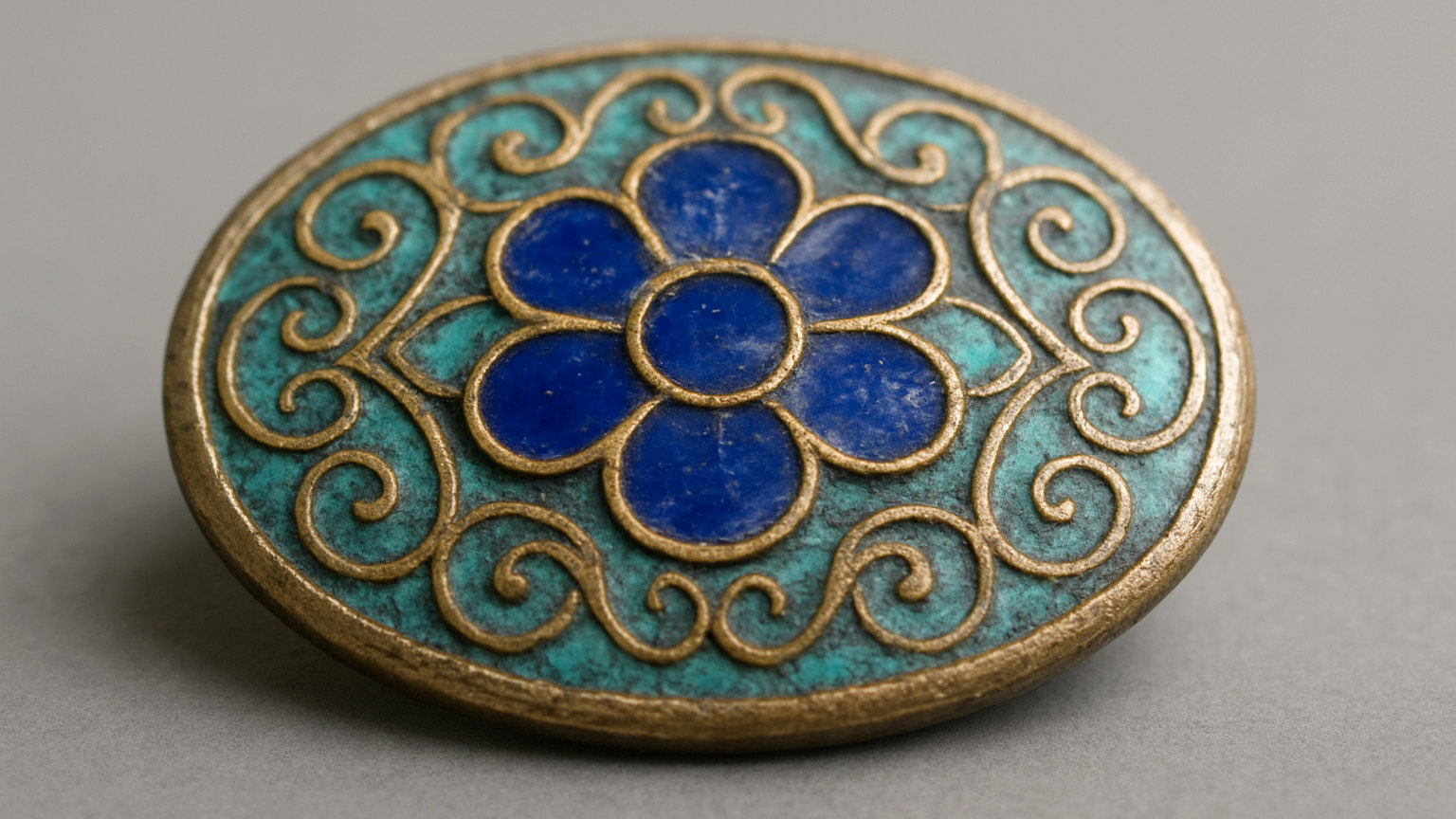
The divisions are thin wires soldered onto a flat metal surface to create cells, which are then filled with enamel. The wire remains visible as a fine bright line between colours.
Look for the characteristic thin, even metal line outlining every colour area, frequently curving in ways that a cut recess could not easily achieve. Cloisonne allows finer and more intricate designs than champleve and the wires are its signature.
What is guilloche enamel?
Translucent enamel applied over a metal surface that has been engine turned with a repeating machine cut pattern, so the pattern shows through the colour and shifts as the piece moves.
Hold the piece under a light and tilt it: the underlying pattern should catch and animate. Guilloche is associated with fine workmanship and commands a premium. Check the enamel for chips at the edges, where the layer is thinnest and most vulnerable.
What is plique a jour?
Enamel held in a framework with no backing, so light passes through like a miniature stained glass window. It is the most technically demanding form and the most fragile.
Hold it up to a light and the colour should glow with light coming through rather than reflecting off a backing. It is strongly associated with the Art Nouveau period and good examples are valuable. Damage is essentially unrepairable, so examine every cell.
What is basse taille?
Translucent enamel over a low relief design carved into the metal, so the varying depth of enamel produces varying intensity of colour and the design shows through.
It differs from guilloche in that the underlying pattern is a carved picture rather than a machine cut geometric texture. Both rely on the metal beneath showing through, so both are ruined by any attempt to fill a chip with opaque material.
Why can enamel not be repaired?
Because repairing it properly means refiring, and refiring an assembled piece of jewellery risks destroying everything else: solder joints melt, stones crack, and adjacent enamel colours run.
Cold repairs using resin are cosmetic only, and they look wrong under close examination since resin lacks the depth and hardness of fired enamel. That is why enamel damage reduces value so sharply and why chips should be assumed permanent when assessing a piece.
What condition problems should you look for?
Chips at edges and around settings, hairline cracks within a colour field, and areas where enamel has lifted from the metal beneath. Examine under magnification and raking light.
Check whether any repair has been attempted, which usually shows as a slightly matt patch with softer colour. On black enamel mourning jewellery, losses along the edges are extremely common and reduce value considerably.
How should enamel jewellery be cared for?
Kept away from knocks and away from temperature change. Enamel and metal expand at different rates, so sudden heating or cooling can crack a colour field.
Never use an ultrasonic cleaner, which will loosen enamel and can shatter it. Never immerse a piece, particularly one with a closed back setting. Wipe gently with a soft dry cloth, store separately in a soft pouch, and remove enamel jewellery before any manual activity.