Cameos are among the most commonly inherited pieces of antique jewellery and among the most variable in value. A hand carved hardstone cameo and a moulded glass imitation can look similar in a photograph and differ by a very large multiple in price. Telling them apart requires a loupe and a window.
What is a cameo?
A design carved in relief, standing proud of a background of contrasting colour. The contrast is what makes it work, and how that contrast is achieved tells you what the material is.
In shell and hardstone, the carver exploits natural layers of different colour in the material, cutting through an upper layer to reveal a darker one beneath. In imitations, two colours are moulded or fused together instead.
How do you recognise a shell cameo?
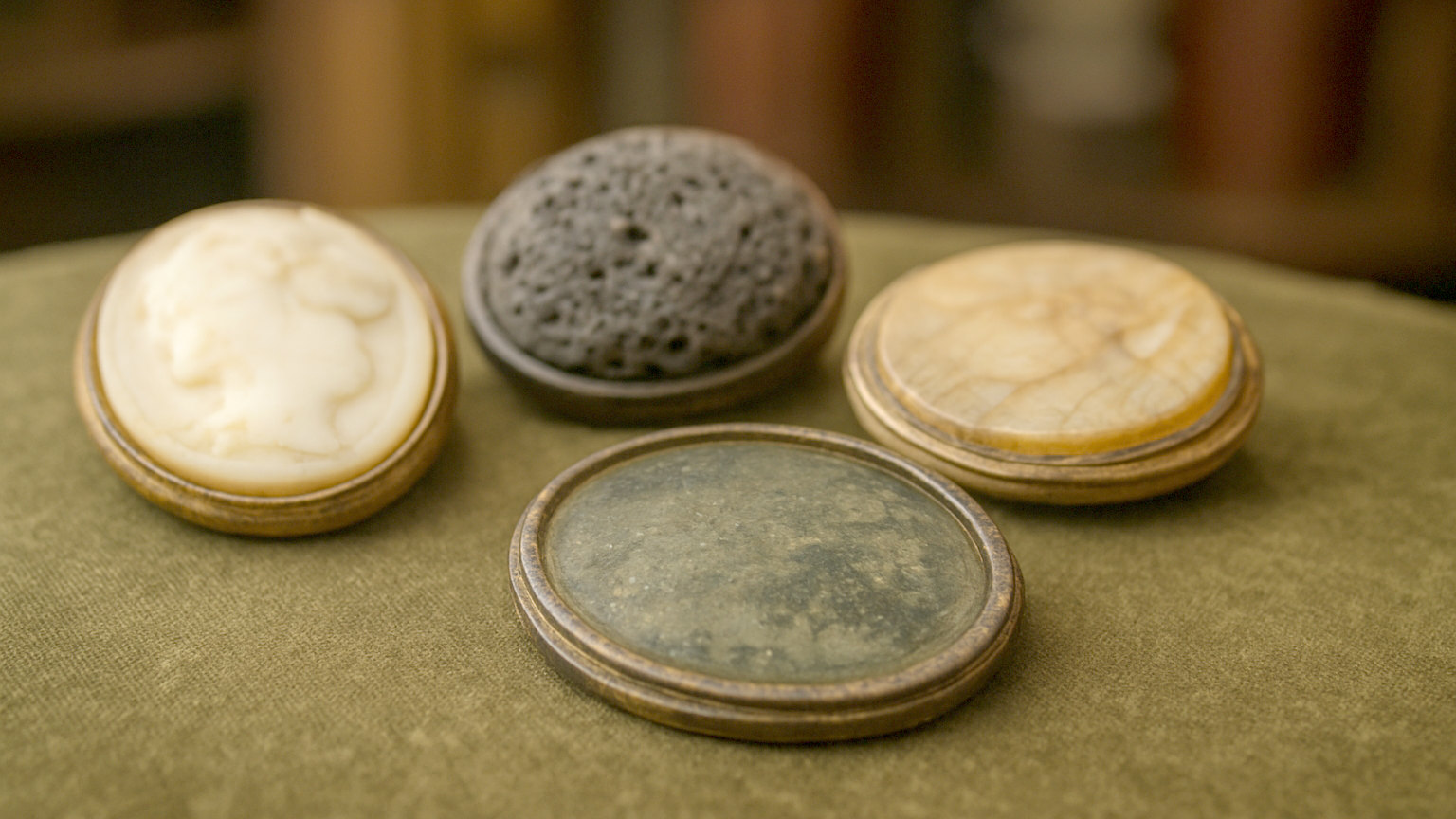
By translucency. Hold it up to a strong light and shell glows warmly, with the thin carved areas transmitting a soft orange light and the background remaining darker.
Shell is comparatively light in the hand and warm to the touch. Look at the back, which on shell is usually slightly concave and shows the natural curve of the shell it was cut from, frequently with fine parallel growth lines visible. Most Victorian cameos are shell.
How does hardstone differ?
By weight, temperature and opacity. Hardstone cameos are carved from agate, onyx or sardonyx, which are cold to the touch, noticeably heavy for their size, and do not transmit light in the way shell does.
The layers in hardstone are sharply defined, so the boundary between the raised design and the background is crisp rather than graduated. The back is usually flat and polished rather than curved. Hardstone cameos are generally worth considerably more than shell.
What is a lava cameo?
Carved from volcanic stone, giving a distinctive matt surface in muted greys, browns, greens and buff tones rather than the white on brown of shell.
They are light, slightly porous and frequently carved in high relief with considerable depth, since the material allows it. Lava cameos are usually early and are collected in their own right. Handle carefully, since the material is softer than stone and chips readily.
How do you spot moulded glass?
By looking for bubbles and a mould seam. Glass imitations were pressed rather than carved, so under magnification you may find small round air bubbles within the material and a faint seam around the edge.
Carved work shows tool marks, slight asymmetry and undercutting where the carver worked behind a projecting element. Moulded work has softer detail with no undercutting, because a mould cannot release from an undercut. Check the edges of the raised design under a loupe.
What does the carving quality tell you?
A great deal about value, independently of the material. Look at the face, the hair and the drapery, since these are where skill shows.
Fine work has crisp detail, individual strands in the hair, a well modelled profile and confident undercutting. Poor work is flat, with soft featureless faces and blunt detail. A finely carved shell cameo can be worth more than a crude hardstone one, so judge the carving as well as the material.
What should you check on the mount?
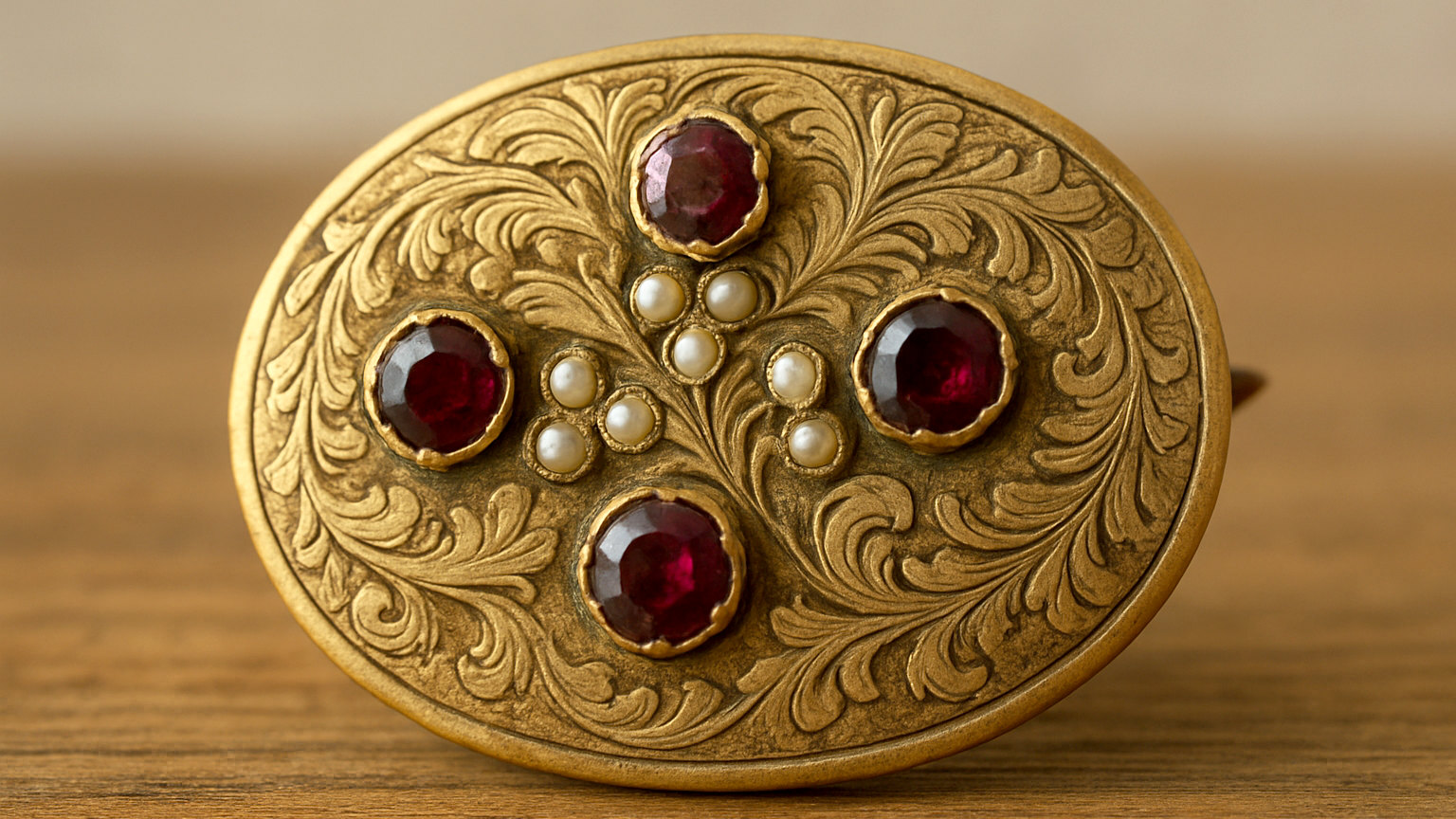
Whether it is original and whether it is precious metal. Cameos were frequently remounted, and a fine cameo in a later base metal mount is worth less than the same stone in its original gold setting.
Look for a hallmark on the mount, and check whether the cameo sits in its setting neatly or has been packed to fit. Check the mount for splits and for worn claws, since a cameo that comes loose is easily chipped.
How should cameos be cared for?
Gently and dry. Never use an ultrasonic cleaner, which will damage shell and lava and can loosen an old setting. Never soak one, since shell absorbs moisture and can crack as it dries.
Wipe with a soft dry cloth only. Keep cameos out of strong sunlight and away from heat, both of which dry shell and cause fine cracking. Store separately in a soft pouch, since harder stones in the same box will scratch a shell surface easily.