Antique jewellery carries an unusual risk: much of it is worth considerably more as a complete period object than as metal and stones, yet a great deal is still bought by weight and broken up. Learning to read a setting is what tells you which situation you are in, and it takes only a loupe and a few minutes.
What is a closed back setting?
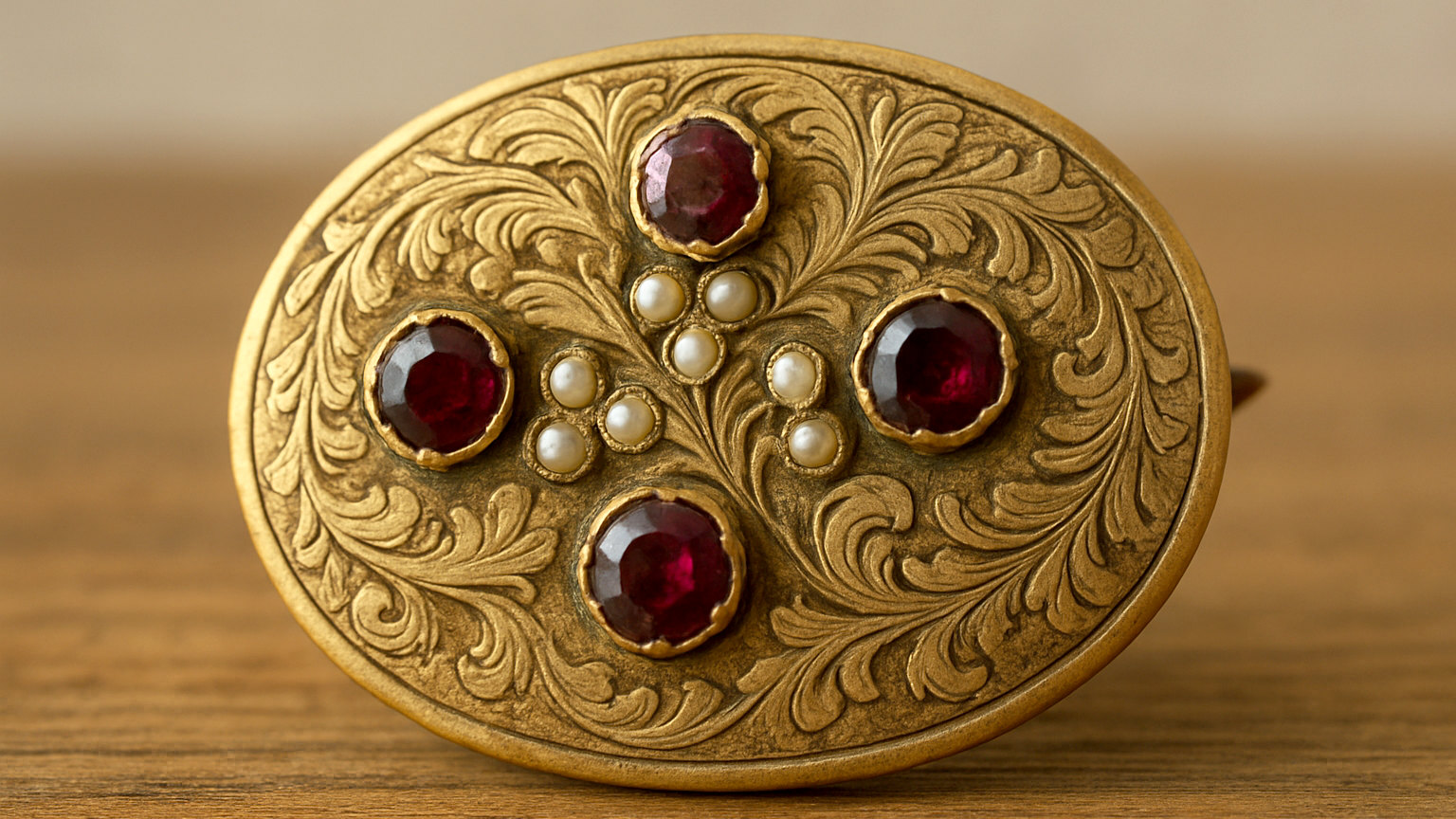
An early setting in which the stone sits in a metal cup closed underneath, so no light passes through from behind. Often a thin layer of coloured foil was placed beneath the stone to improve its colour and brightness.
Closed backs indicate earlier work, before cutting had advanced enough to make stones brilliant on their own. They also mean the piece must never be immersed in water or cleaned ultrasonically, because moisture reaching the foil tarnishes it permanently and ruins the appearance of the stone.
How do old stone cuts differ from modern ones?
Older cuts were shaped by hand to save weight from the rough crystal rather than to maximise sparkle, so they look different in ways that are easy to spot once you know.
Rose cuts have a flat base and a domed top faceted to a point, giving a soft glow rather than fire. Old mine and old European cuts have a small flat top facet, a high crown, a deep body and a noticeably large flat facet at the base, visible as an open circle when you look straight down. Modern brilliants have a much larger top facet and a tiny point at the bottom.
What does the metal tell you?
Silver over gold is a strong indicator of earlier work. Diamonds were traditionally set in silver because it is white and does not tint the stone, with a gold backing added for strength, so a piece with a silver front and gold reverse is likely to predate the widespread use of platinum and white gold.
Look for hallmarks on the shank of a ring, the reverse of a brooch or the clasp of a chain. Not all antique jewellery was marked, since small and delicate items were often exempt, so an absent mark is not evidence of anything. Where a mark exists it dates the piece precisely.
What is mourning jewellery?
Pieces made to commemorate a death, produced in large numbers during periods when formal mourning was a social expectation. They frequently contain plaited hair under glass or crystal, and carry inscriptions with names and dates on the reverse.
Materials include jet, black enamel, and glass imitating jet. An inscribed date is genuinely useful, because it dates the piece exactly, and these are among the few antiques that document themselves. They are collected seriously and should never be broken up.
How can you test metal safely?
Start with a hallmark, since that answers the question without touching the object. Where there is none, a jeweller can test electronically without damage, and most will do so quickly.
Avoid acid testing kits on anything you might keep, because they work by damaging a small area permanently. A magnet is a useful first check, since gold, silver and platinum are not magnetic, though many base metal alloys are not either, so it rules things out rather than confirming them.
When is a piece worth more than its scrap value?
Whenever it is a good example of a recognisable period style, whenever the workmanship is fine, and whenever it is complete and undamaged. Hand made settings, hand engraving and old cut stones all indicate something worth keeping intact.
Get a specialist opinion before selling anything to a buyer offering a price by weight. Weight based offers ignore craftsmanship entirely, and a great deal of irreplaceable jewellery has been melted because nobody looked at it properly first.
How should antique jewellery be cared for?
Store pieces separately in soft pouches or a lined box, since harder stones scratch softer ones and metal rubs against metal. Keep closed back settings and any piece containing hair, fabric or foil completely dry.
Never use an ultrasonic cleaner on antique jewellery. The vibration loosens old settings, damages fragile stones and can destroy foil backing. Wipe gently with a soft dry cloth, and have settings checked periodically by a jeweller, since worn claws are how stones get lost.