Antique chains rarely carry hallmarks, because individual links fell well below the weight thresholds at which marking was required. That leaves the fastening and the link construction to do the dating work, and both are more informative than they look. A chain is also the piece of jewellery most likely to be broken up for scrap, which makes recognising a good one worth the effort.
What does the clasp tell you?
More than anything else on the chain, because clasps were functional engineering that improved steadily. A barrel clasp, where two halves screw together into a small cylinder, indicates earlier work and is often decorated to match the chain.
Bolt rings, the small circular fastening with a spring loaded catch, came later and remain in use. Dog clips and swivel clips, larger and stronger, appear on watch chains and guard chains. A modern lobster style clasp on an old chain means the fastening has been replaced, which is common and acceptable.
How do you read the links?
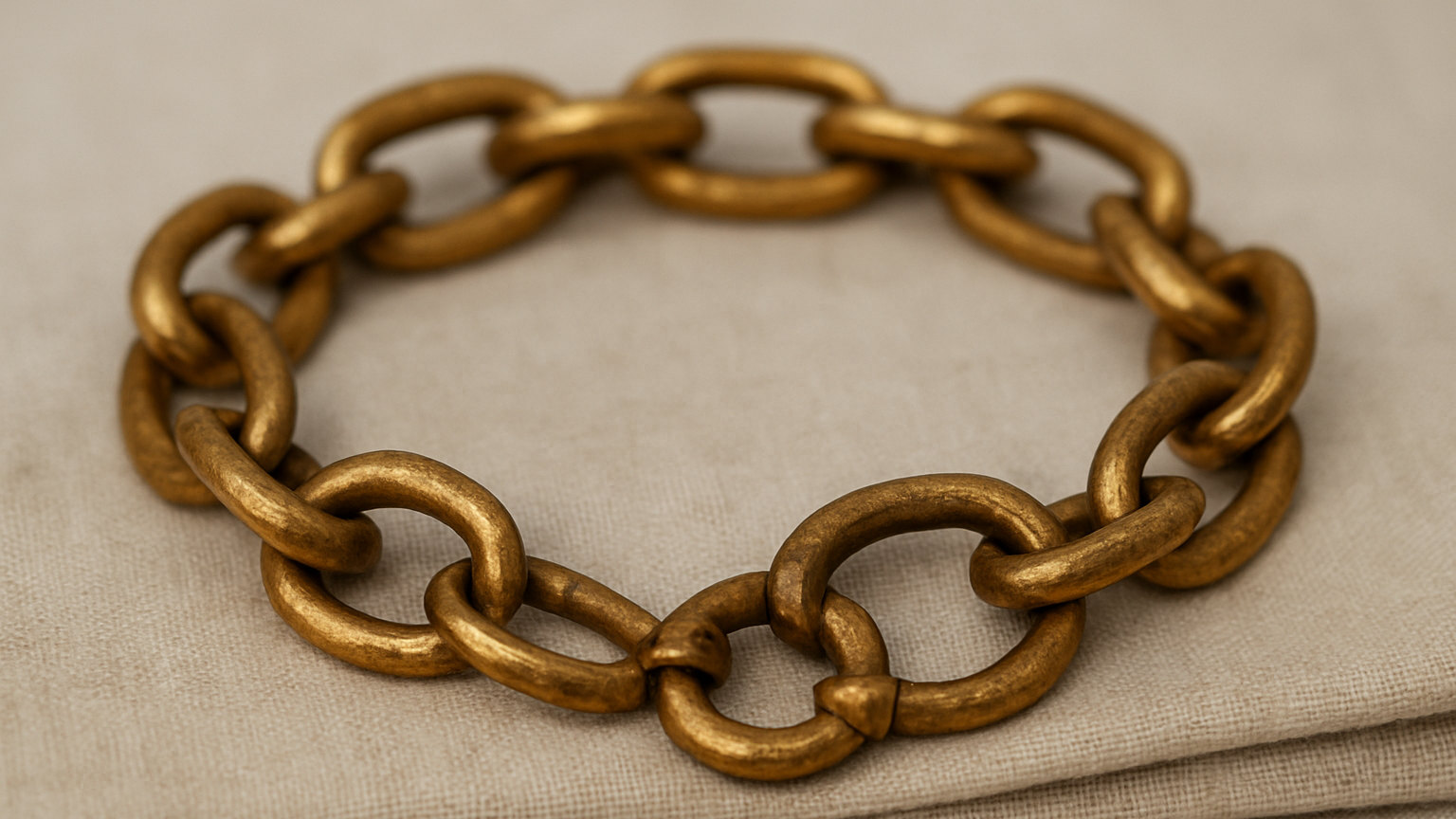
Look at whether they were made by hand or by machine. Early links were formed individually and soldered closed, so each one varies slightly in shape and the solder join is visible under magnification as a small seam.
Machine made links are identical to one another, with perfectly consistent shape and spacing. Look at a run of ten links: variation indicates hand work and greater age, uniformity indicates later manufacture. Hand made chains also tend to have slightly irregular flexibility rather than a completely even drape.
What kinds of antique chain are there?
Guard chains, which are long and worn around the neck to secure a watch or eyeglass, are among the most common survivors. Albert chains are shorter, worn across a waistcoat with a bar to pass through a buttonhole.
Muff chains, longchains and various link patterns including trombone, belcher, curb and fancy fetter designs all turn up. Many long chains have been shortened at some point to suit modern wear, which reduces value, so check whether the two ends match each other in construction.
Is the chain gold?
Often, and frequently unmarked. Do not assume base metal because there is no hallmark, since exemptions meant a great deal of genuine gold jewellery was never marked.
Some chains carry a tiny stamp on the clasp or on a single link, so check both carefully under magnification. Otherwise have it tested electronically by a jeweller, which is quick and does no damage. A magnet is a useful first check, since gold is not magnetic, though it rules things out rather than confirming them.
What about rolled gold chains?
Extremely common, and worth recognising. Rolled gold has a genuine layer of gold bonded to a base metal core, so it wears well for decades before the base shows through at the high points.
Look at the links where they rub against each other, since that is where wear concentrates. A duller, greyer or pinker patch with a fairly defined edge indicates the gold layer has worn through. Marks indicating rolled gold sometimes appear on the clasp. These chains have real decorative value even though the metal value is small.
How do you check a chain is safe to wear?
Hold it up and run it slowly through your fingers, watching each link. Look for links that have opened slightly, links that are worn thin where they rub, and any repair using a link of different pattern or colour.
Test the clasp by pulling gently but firmly. Worn clasp springs are the commonest cause of a lost chain. Pay particular attention to the links immediately either side of the clasp, since those take the most stress and wear fastest.
Is a chain worth more than its scrap value?
Frequently, and this is where money gets lost. Buyers offering by weight ignore workmanship entirely, and a great deal of hand made period chain has been melted because nobody looked at it properly.
Long chains, chains with decorative links, those with original barrel clasps and anything with attached fittings such as slides or tassels are all worth having assessed by a jewellery specialist before any weight based offer is accepted.