Lockets are among the most personal antiques, because most of them were made to hold something and a great many still do. That content is frequently the best dating evidence the object has, and it is also the most fragile part, so knowing how to open one without damage matters before curiosity takes over.
How do you open a locket safely?
Look for the opening mechanism before applying any force. Most lockets open with a thumbnail in a small lip on the edge opposite the hinge, and some have a tiny catch or a push piece.
Support the locket in one hand and lift gently with the other. If it resists, stop. Old hinges seize, glass can be loose behind the frame, and forcing a stuck locket is how hinges break and contents fall out. A jeweller can open a stubborn one properly.
What is usually inside?
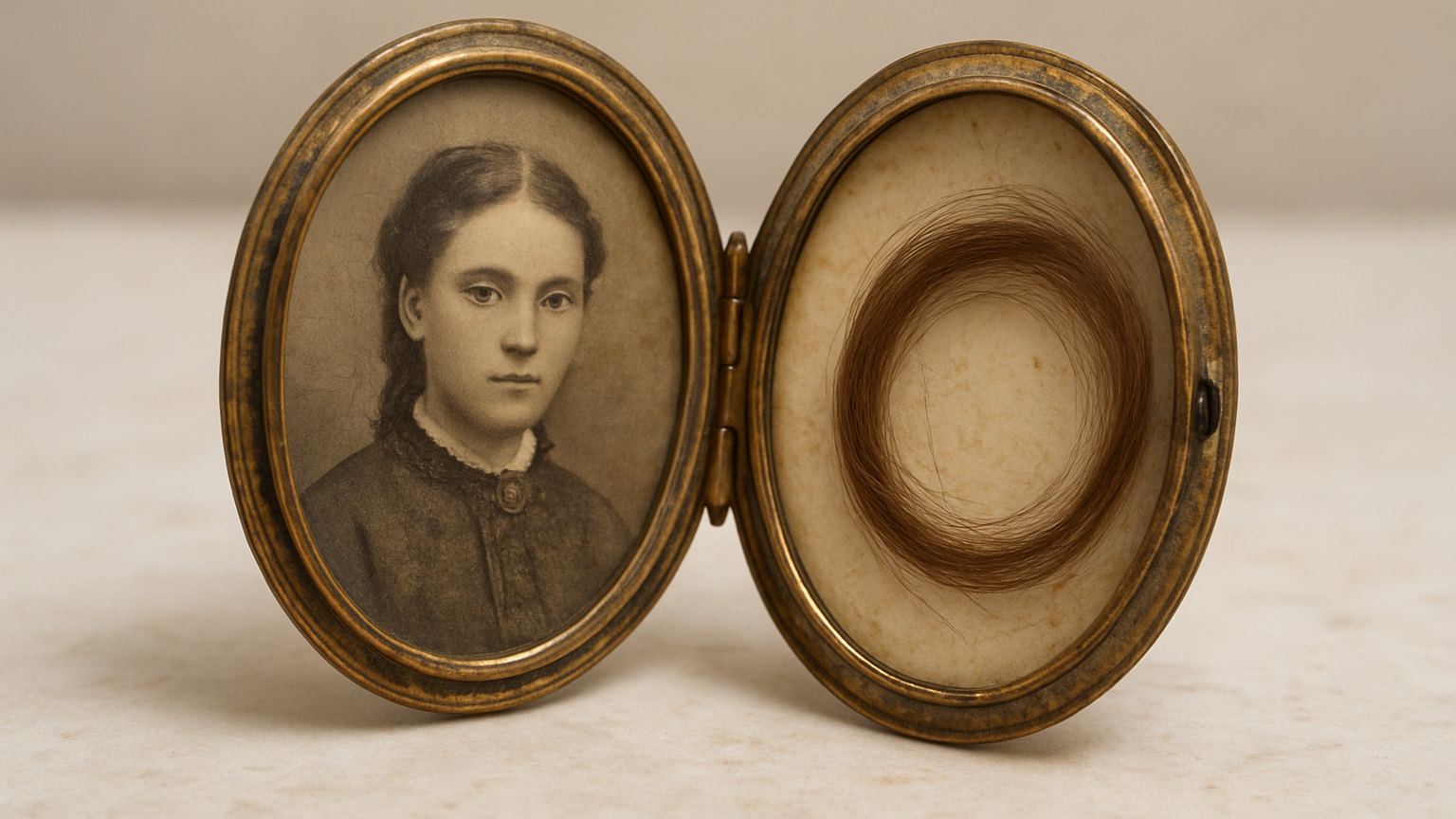
Photographs, hair, or both, held behind a glass or crystal cover in a shallow compartment on each side. Many lockets hold two images facing each other.
Hair may be a simple coiled lock, a flat plaited panel, or worked into an elaborate design. Some compartments hold a scrap of fabric, a pressed flower or a folded note. Handle whatever is inside as little as possible, and photograph it in place before removing anything at all.
How does the content date the locket?
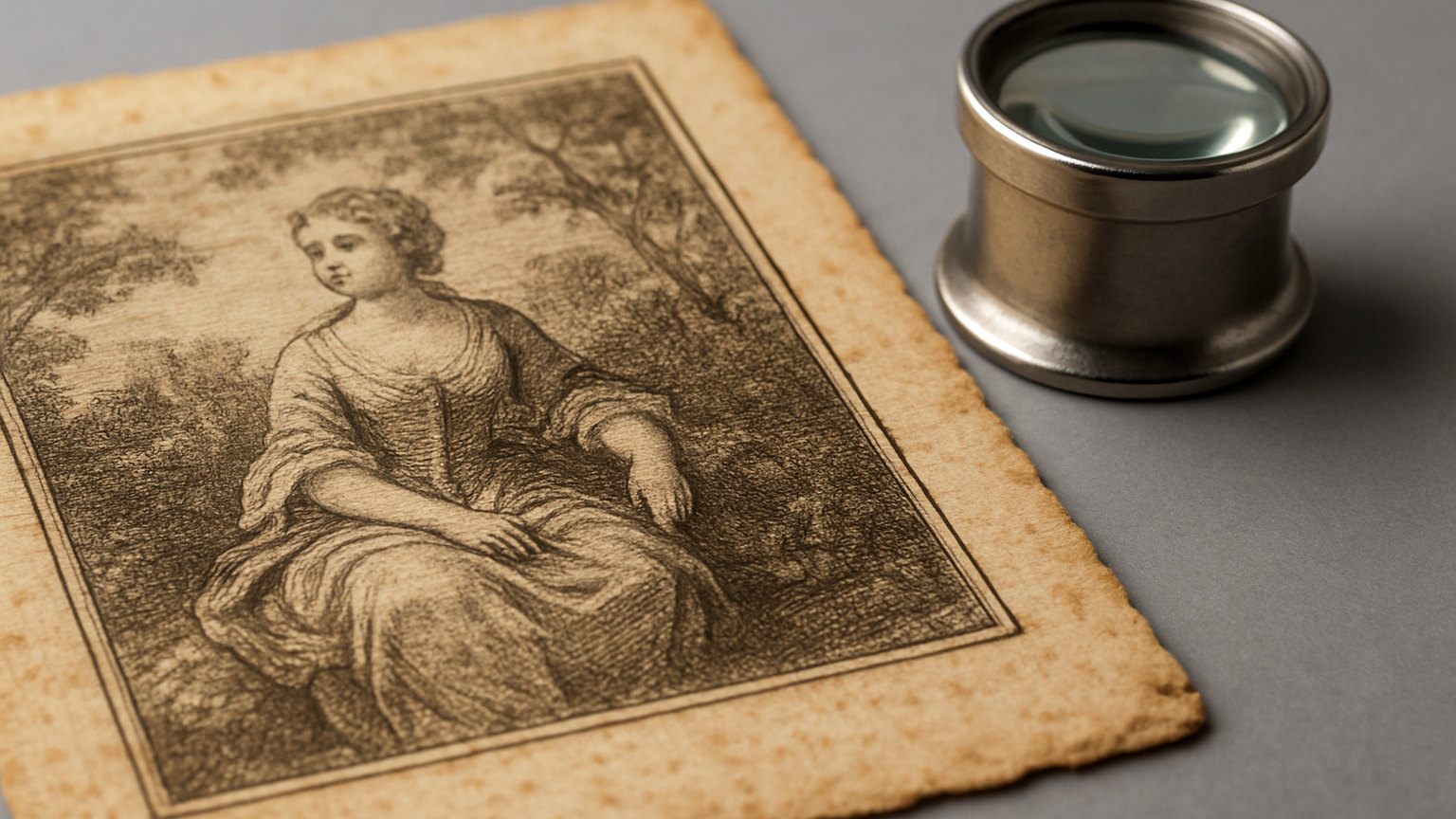
Photographic processes changed on a documented timetable, so the type of image gives a firm earliest possible date. Early photographic formats on metal or glass differ visibly from later paper prints.
Look at the support the image sits on, its thickness and its surface. A photograph on a thin metal plate is quite different from a paper print mounted on card. Clothing and hairstyles in the image narrow the date further, and studio names printed on the reverse of a print can be traced through trade directories.
What do inscriptions tell you?
Frequently an exact date. Many lockets carry engraved initials and a date on the back, and memorial lockets often record a name, a date of death and an age.
Read the engraving under magnification and raking light, since it wears with use against clothing. Record it exactly, including abbreviations. That inscription is usually the single most valuable feature for research, and it turns an anonymous object into one you can trace through burial and probate records.
What does the outside tell you?
Form, decoration and fittings all help. Look at the hinge construction, the bail through which a chain passes, and the catch, all of which became more sophisticated over time.
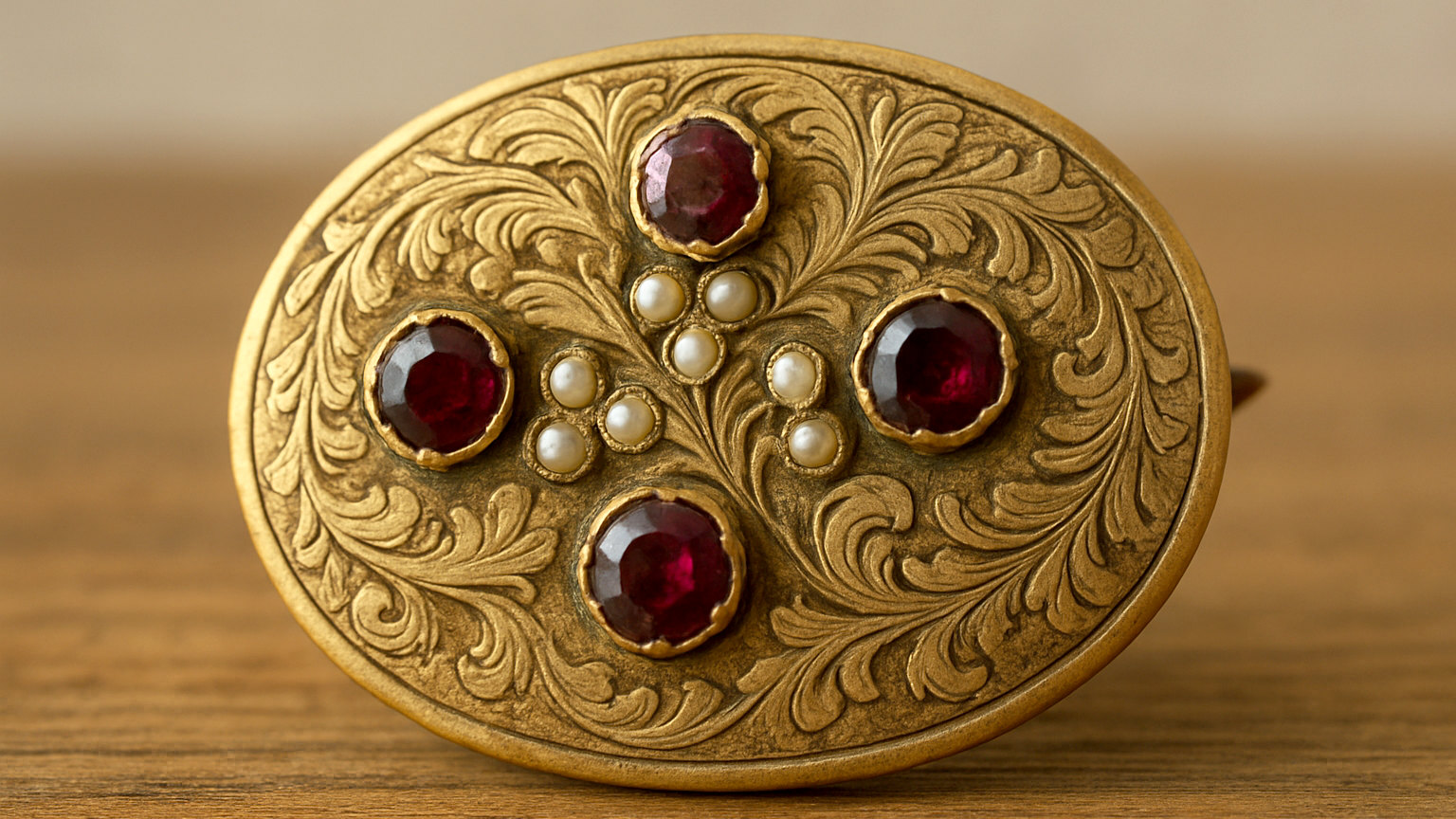
Engraved decoration styles moved through recognisable fashions, and applied ornament, enamel work and set stones each belong to particular periods. Check for a hallmark on the bail or inside the rim, though many lockets were exempt from marking because of their weight, so an absent mark means nothing.
What materials were used?
Gold, silver, gilt metal, rolled gold and pinchbeck all appear, and an unmarked locket is not necessarily base metal. Look at wear points on the edges and the bail, since rolled gold and gilt show base metal breaking through where the surface has worn.
Mourning lockets frequently use black enamel, and white enamel indicates someone who died unmarried, which is a useful convention. Jet, vulcanite and bog oak appear in cheaper memorial pieces.
How should a locket be cared for?
Keep it dry above all, because anything inside is organic and moisture destroys it. Never immerse a locket in water and never clean one ultrasonically, since vibration loosens settings and can shatter old glass.
Check the glass covers are intact and seated, since a cracked cover lets damp reach the contents. Wipe the exterior gently with a soft dry cloth only. If contents have come loose, take the locket to a jeweller rather than attempting to reseat them, since a fragment of hair or a photograph once creased cannot be restored.